
News
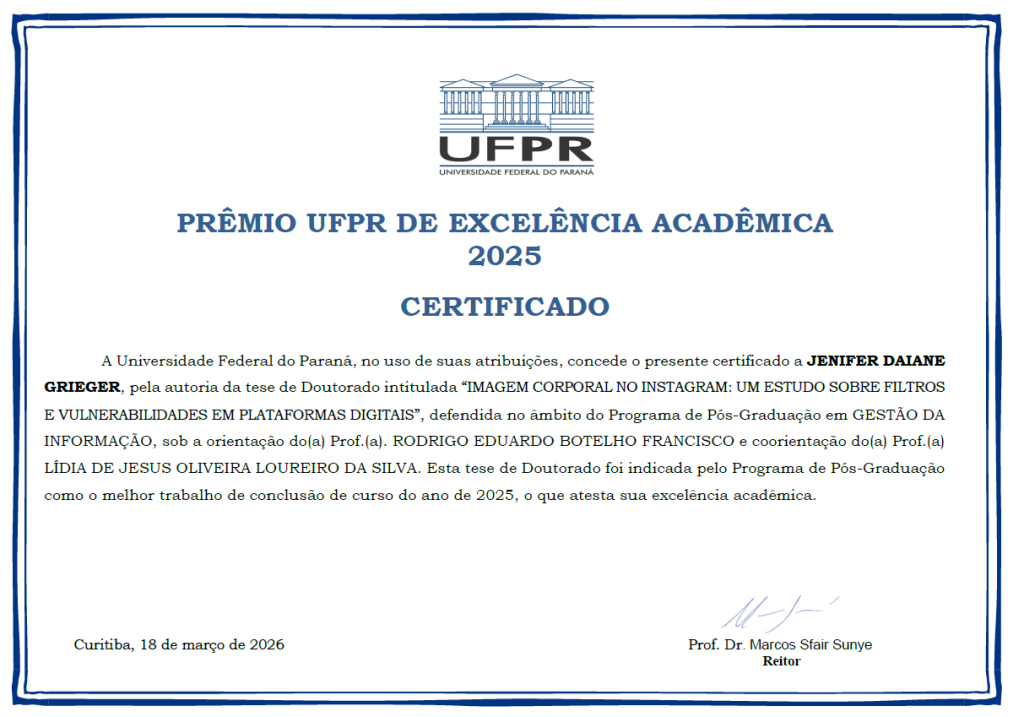
Jenifer Daiane Grieger has been awarded the Best PhD Thesis of 2025 by the Graduate Program in Information Management at the Federal University of Paraná, Brazil.
The distinction was granted for her thesis entitled “Body Image on Instagram: A Study on Filters and Vulnerabilities in Digital Platforms”, supervised by Professor Rodrigo Eduardo Botelho Francisco and co-supervised by Professor Lídia de Jesus Oliveira, a DigiMedia researcher.
Jenifer Grieger was a PhD student on a cotutelle doctoral program between the Doctorate in New Media at the University of Aveiro (UA) and in Information Management at the Federal University of Paraná (UFPR), and she defended her PhD thesis in December 2025.
During her doctoral studies, Jenifer Grieger conducted part of her research at DigiMedia, strengthening international collaboration and contributing to the advancement of knowledge in the field of digital media.
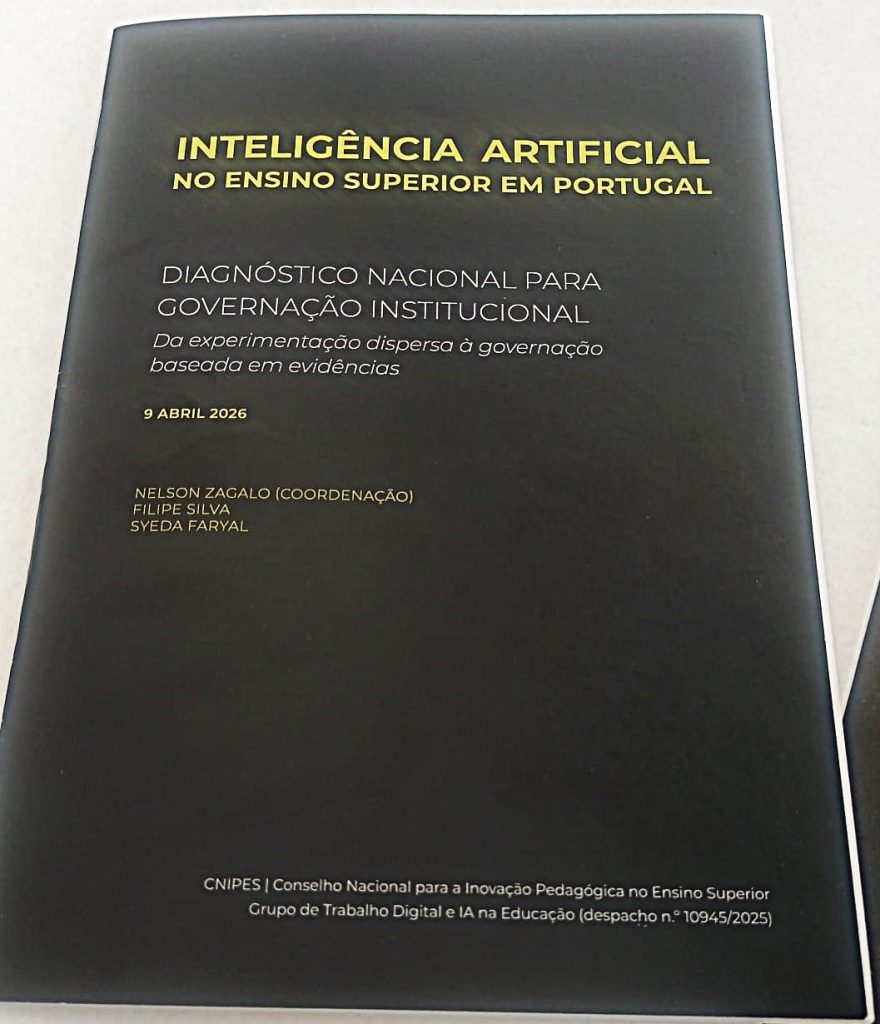
On 9 April 2026, DigiMedia contributed to the CNIPES event Liderança Estratégica para a Inteligência Artificial na Educação Superior, held in Tomar and dedicated to the governance, opportunities, and institutional challenges of artificial intelligence in higher education. Bringing together institutional leaders (rectors and vice-rectors), international experts, and policymakers, the event created a space for strategic reflection on how higher education institutions can respond to AI in ways that are ethically grounded, pedagogically meaningful, and aligned with their educational mission.
One of DigiMedia’s central contributions to the event was the presentation “Liderança e governação da IA no Ensino Superior: diagnóstico global e orientações estratégicas,” delivered by Sandra Soares and Nelson Zagalo. The presentation drew on the work developed for the report Inteligência Artificial no Ensino Superior em Portugal: Diagnóstico nacional para governação institucional, coordinated by Nelson Zagalo and authored with DigiMedia researchers Filipe Silva and Syeda Faryal. Developed within DigiMedia’s AI in HE project, the report combined four complementary strands of research: the analysis of 30 international, national, and institutional policy documents, a systematic review of 191 peer-reviewed studies on AI use in higher education, an examination of public and media concerns surrounding generative AI, and a national survey of 68 Portuguese higher education institutions. This work has helped build a foundation for institutional decision-making in this area by supporting the development of evidence-based recommendations to the Ministry of Education.
Beyond the presentation itself, DigiMedia’s contribution also extended to the design of the Decision Table activity, presented as a practical instrument to support institutional reflection on AI governance. Structured around four dimensions (Permit, Prevent, Organize, and Measure), the activity invited participants to consider issues such as acceptable uses of AI in student services and accessibility, conditions for safe experimentation, red lines involving sensitive data or high-impact automated decisions, minimum governance structures, and indicators of institutional maturity. In this sense, DigiMedia helped move the discussion beyond general principles, offering participants a concrete framework for thinking about AI implementation in higher education settings.
The document can be read here: https://www.ua.pt/file/90271
Carla Leite will present her PhD thesis “Leveraging Acquisition and Informed Decision-Making for Birth Through Digital Media“, on April 22nd, 2026, at 2:30pm.
This research was developed within the Doctorate in Multimedia in Education, under the supervision of Professors Rita Oliveira and Catarina Lélis.
More information here.
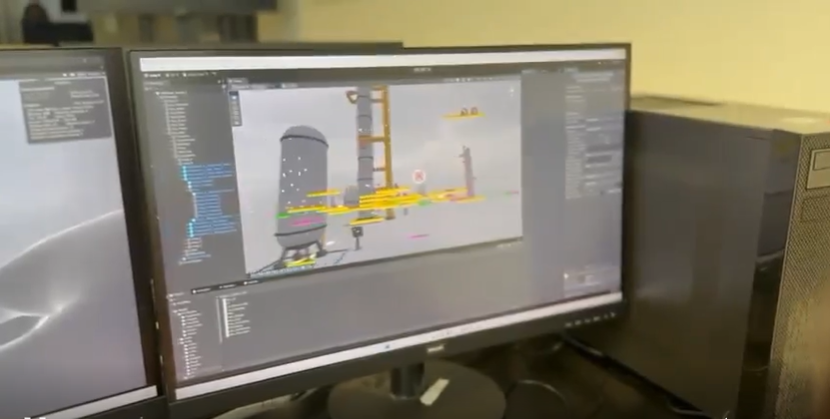
As part of the European VRChem project, our team at the Universidade de Aveiro joined forces with international partners to launch a new immersive learning experience. Researchers from the DigiMedia – Digital Media and Interaction Research Centre and the LAQV/REQUIMTE associate laboratory developed and implemented an educational scenario tailored for Higher Education in Chemistry and Chemical Engineering.
Within this virtual environment, students can learn, test, and experiment with various activities integrated into a digital industrial park.
Beyond navigating and gaining familiarity with typical industrial settings, students are challenged to perform equipment analysis and replacement, technical measurements, and logistics operations.
Virtual Reality is a proven highly effective medium for education, enabling students to explore complex scenarios in an accessible way, where they can experiment and learn from mistakes without real-world risks.
Launching soon on our official website! This app is one of three immersive scenarios co-created with our international consortium partners.
This work is the result of a collaborative effort between DigiMedia – Digital Media and Interaction Research Centre, the Departamento de Comunicação e Arte da Universidade de Aveiro, the Departamento de Química da Universidade de Aveiro, the VRChem Project and the Associated Laboratory for Green Chemistry (LAQV/REQUIMTE)/REQUIMTE.
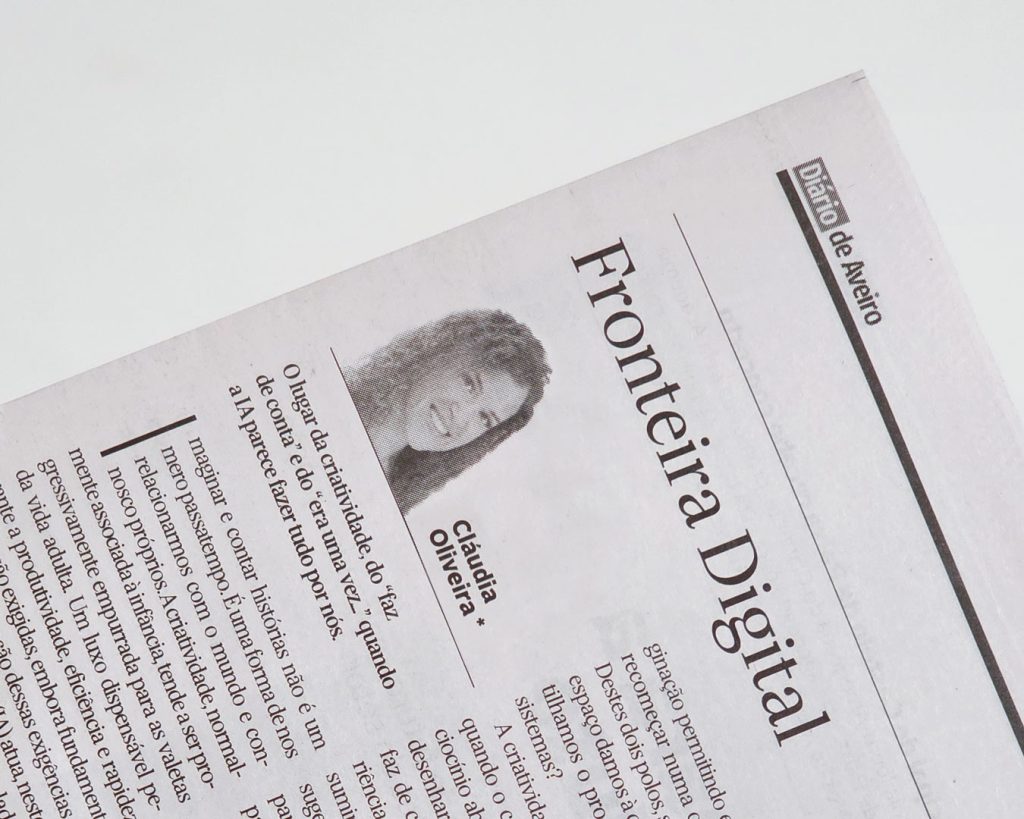
“O lugar da criatividade, do “faz de conta” e do “era uma vez…” quando a IA parece fazer tudo por nós” is the newest article of the DigiMedia opinion column “Fronteira Digital” in the newspaper Diário de Aveiro, written by Cláudia Vale Oliveira, a PhD student in New Media.
This text inspires reflection on the role of creativity in the age of artificial intelligence, highlighting the importance of integrating AI as a tool to enhance creative processes, without replacing reasoning, autonomy and agency, emphasizing the need to preserve imagination, authorship, and critical thinking in an increasingly automated world.
The article can be read here.
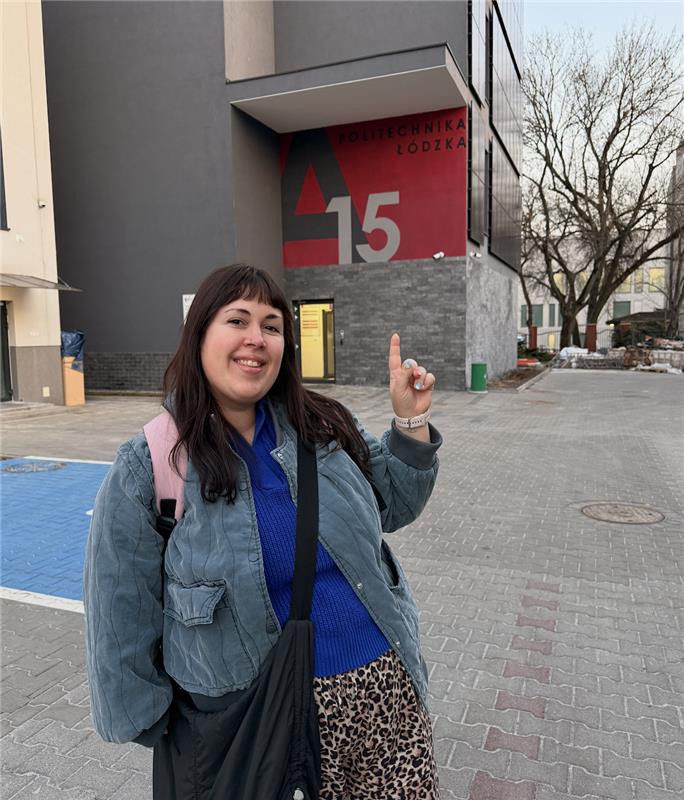
Joana Raminhos da Silveira, a PhD student in Multimedia in Education at the University of Aveiro, was selected to participate in the Let’s CHAOS (Let’s Create a High-tech Accessible Opportunities for a Sustainable Future). As part of this initiative, she completed an intensive on-site mobility period at the Łódź University of Technology (TUL), an ECIU (European Consortium of Innovative Universities) member in Poland.
During the programme, Joana applied Challenge-Based Learning (CBL) methodologies to the field of Inclusive Systems Design. Working with an interdisciplinary team, she focused on human-centric solutions aimed at supporting children with limb differences and their families.
The experience provided advanced training in emerging technologies and fostered international collaboration with researchers and experts from the ECIU network.
On Saturday, March 7, a pilot test of the Oh!Bug mobile application took place at Parque da Vila in Sever do Vouga, with the participation of members of the DigiMedia research unit.
The main goal of this test was to validate the methodology defined for the study “Engaging Young Students with Mobile Applications Focused on Sustainable Development and the Environment – The Case Study of the Oh!Bug Mobile Application.” This research is being developed by PhD candidate Sara Martins, under the supervision of Carlos Santos and David Oliveira, within the Doctoral Programme in Multimedia in Education.
This study aims to investigate the impact of interaction and geolocation systems included in mobile applications on children’s relationship with nature, through the implementation of field trips in which participants identify natural species using the Oh!Bug app.

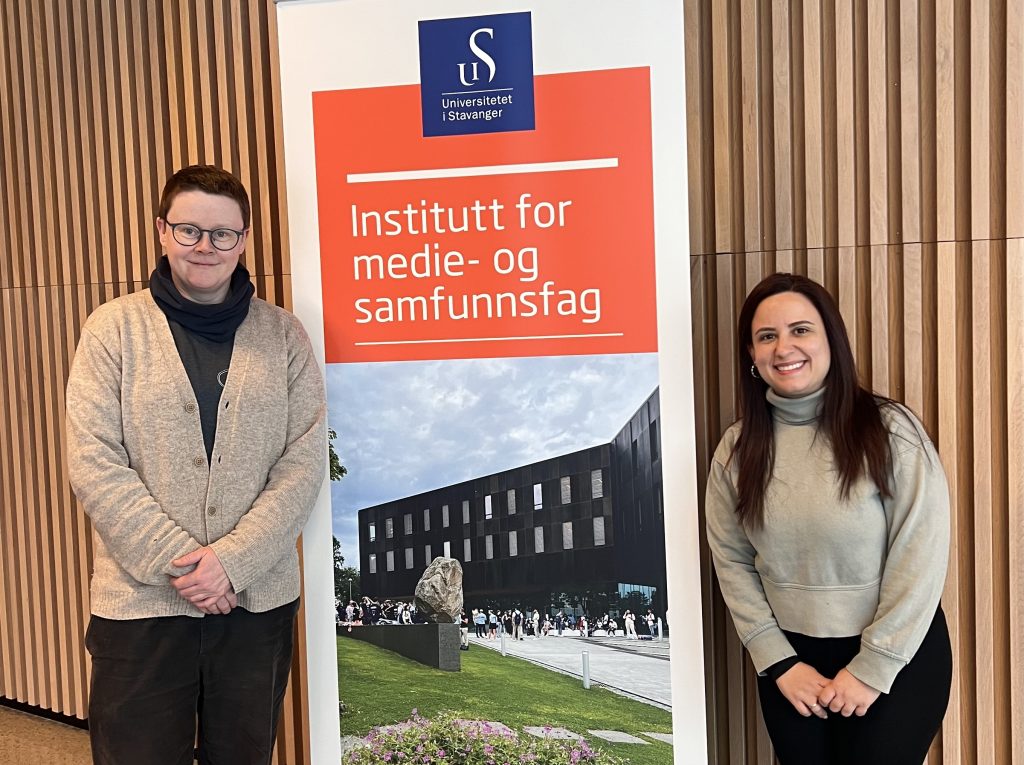
Maria Júlia Vieira, a PhD student in the Doctoral Program in New Media, carried out a research mobility under the Erasmus+ program at the University of Stavanger (Norway), during the month of February. The visit took place at the Centre for Gender Studies under the supervision of Professor Elisabeth Lund Engebretsen.
The main goal of the mobility was to further develop her doctoral research, which focuses on female inclusion and representation in video game live streaming culture. During her stay, the doctoral researcher had the opportunity to interact with scholars working in the field of gender studies, fostering an interdisciplinary dialogue between New Media, Gender Studies, and digital culture. This academic exchange helped enrich the theoretical framework of the research and broaden critical perspectives on gender issues in digital environments and online communities.
As part of the activities carried out during the visit, Maria Júlia Vieira presented her research seminar at the Centre for Gender Studies, where she shared the progress and current development stages of her doctoral thesis. The session included the participation of department members and provided constructive discussions and expert feedback, which contributed to refining the methodological and conceptual framework of her doctoral project. This experience represented a significant opportunity for the internationalization of her research, allowing her not only to share her work in an international academic context but also to integrate new theoretical and methodological approaches relevant to the study of gender dynamics in contemporary digital culture.
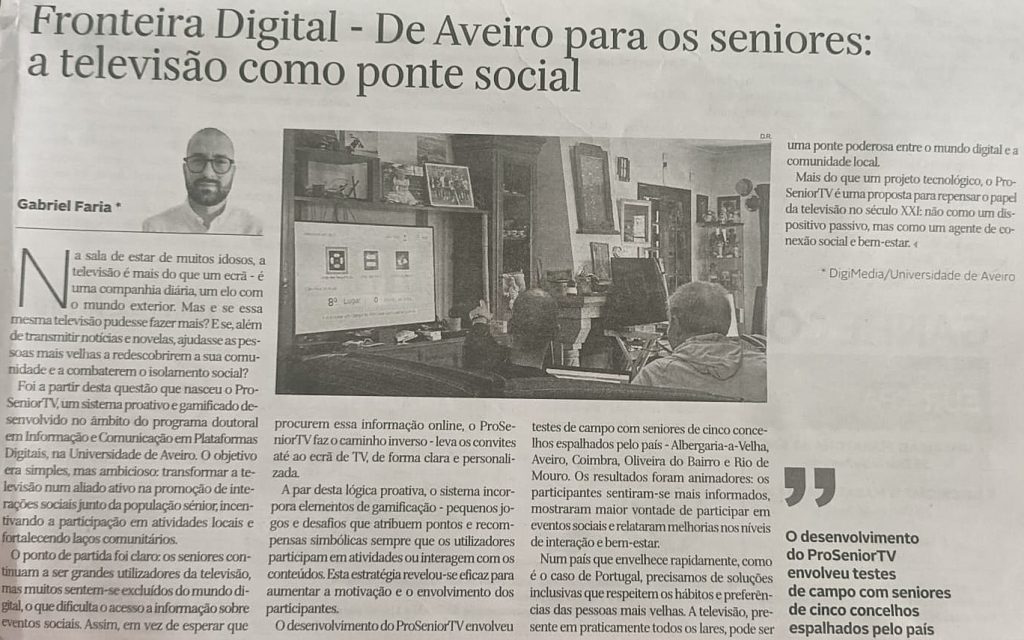
The most recent opinion article in Diário de Aveiro “De Aveiro para os seniores: a televisão como ponte social“, written by Gabriel Faria, highlights the ProSeniorTV, a project developed at the Universidade de Aveiro that explores how television can help reduce social isolation among older adults.
The article can be read here.
The column “Fronteira Digital” can be read on the first Wednesday of every month in the printed version. This is an opportunity to show the local community the themes we work on and the research carried out at DigiMedia.
Our next text will be released on April 1, 2026.
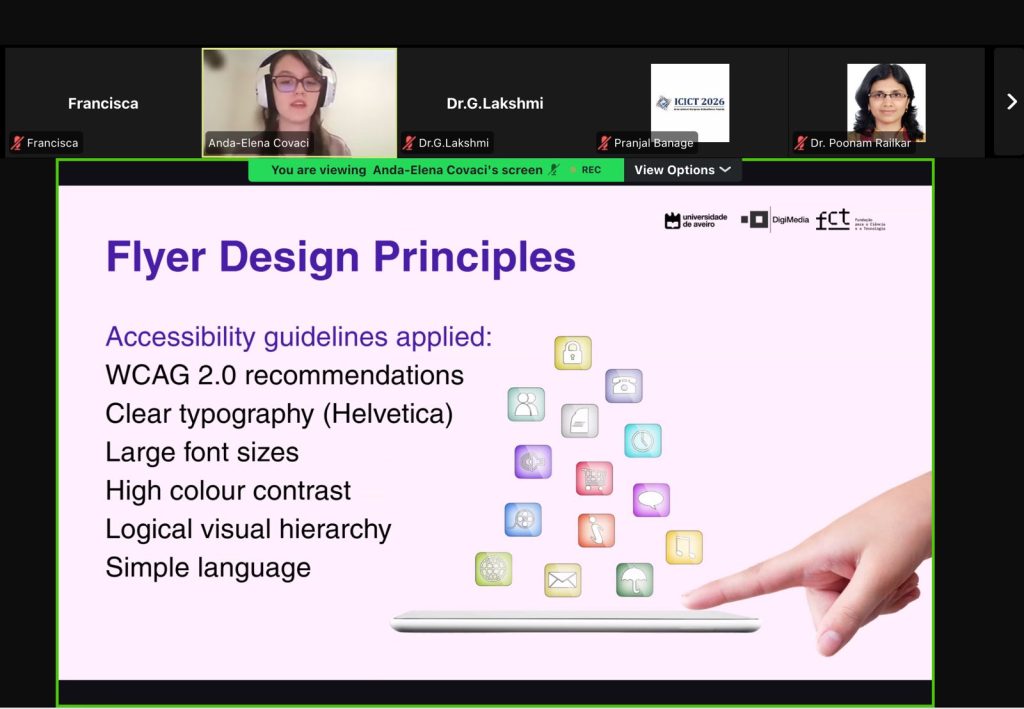
Anda-Elena Covaci, currently a second-year student in the Multimedia and Communication Technologies degree programme at the University of Aveiro, remotely presented a scientific paper on 27 February at the 11th International Congress on Information and Communication Technology (ICICT 2026), an international conference held in London, United Kingdom.
The paper, entitled ‘Inclusive Communication through Universal Design: Designing accessible informational flyers to promote awareness, resources, and support for People with Disabilities’, was developed as part of the Students@Digimedia #04 initiative, resulting from research conducted by the student in collaboration with the research team at DigiMedia’s UAInclusive Laboratory.
The research focuses on applying the principles of Universal Design to the creation of accessible informational flyers, with the aim of promoting more inclusive communication and facilitating access to information, resources, and services for people with disabilities. The work highlights the importance of inclusive design as a tool for reducing informational barriers and reinforcing user-centred communication practices.
The Students@Digimedia initiative aims to promote the active involvement of students in scientific research activities, encouraging the development of academic skills and participation in international scientific events. The presentation at ICICT 2026 is yet another example of the collaboration between teaching and research at the University of Aveiro, highlighting the impact of the work carried out within the scope of DigiMedia.
The DigiMedia Laboratories, LabUA Inclusive and Lab XR, hosted a group of young adults with diverse support needs from the Organization “Pais em Rede” for a co-creation session focused on developing accessible Virtual Reality (VR) games.
The PhD student Débora Dias and the master’s student Rita Simões led the initiative, under the guidance of Professor Mário Varinhos and researcher Oksana Tymoshchuk. The session aimed to involve participants in designing inclusive solutions by valuing their experiences and perspectives.
The young people actively contributed ideas, suggestions, and feedback, providing essential input for a VR game designed to help students with autism participate in team sports. This co-creation approach reinforces the importance of involving end users in designing inclusive technologies, ensuring solutions effectively meet their real needs.
This initiative demonstrates the laboratories’ commitment to promoting inclusion through technological innovation and creating more accessible, equitable digital experiences for all.

The regular issue of the second semester of 2025 (JDMI Vol. 8, No. 20) is now available.
This regular issue, titled “Friction in Games and Computational Media”, guest-edited by Pedro Cardoso and Miguel Carvalhais, explores current discourses and practices on how we can design for aesthetic friction while avoiding the pitfalls of hedonistic loops and overly human-centred design approaches. It calls for strategies that deliberately introduce friction into interactions with computational systems in order to foster meaningfulness and enhance the quality of experience with computational artefacts.
The issue is organized into four thematic groups: Play; Art; Human; More-than-Human.
The full issue is available here.




