News

Explore the latest research insights.

The DigiMedia Laboratories, LabUA Inclusive and Lab XR, hosted a group of young adults with diverse support needs from the Organization “Pais em Rede” for a co-creation session focused on developing accessible Virtual Reality (VR) games.

The PhD student Débora Dias and the master’s student Rita Simões led the initiative, under the guidance of Professor Mário Varinhos and researcher Oksana Tymoshchuk. The session aimed to involve participants in designing inclusive solutions by valuing their experiences and perspectives.

The young people actively contributed ideas, suggestions, and feedback, providing essential input for a VR game designed to help students with autism participate in team sports. This co-creation approach reinforces the importance of involving end users in designing inclusive technologies, ensuring solutions effectively meet their real needs.

This initiative demonstrates the laboratories’ commitment to promoting inclusion through technological innovation and creating more accessible, equitable digital experiences for all.

Sudarshan Kadam, a PhD student in New Media, at the University of Aveiro, was selected to participate in the Let’s CHAOS course, implemented within the NAWA SPINAKER programme.

The Let’s CHAOS course offers an advanced learning pathway focused on Inclusive Systems Design, combining critical reflection, research methodologies, and interdisciplinary perspectives. As part of the programme, participants will attend an online component, followed by a fully funded on-site mobility period, in March, at Łódź University of Technology (Poland), an ECIU University.

Sudarshan’s PhD project’s “Interactive Shoppable Video strategies for specific markets- Portugal & Spain” is supervised by Professor Jorge Ferraz Abreu and Professor Telmo Silva.

This participation reinforces DigiMedia’s commitment to international collaboration, advanced doctoral training, and inclusive, forward-looking research practices.

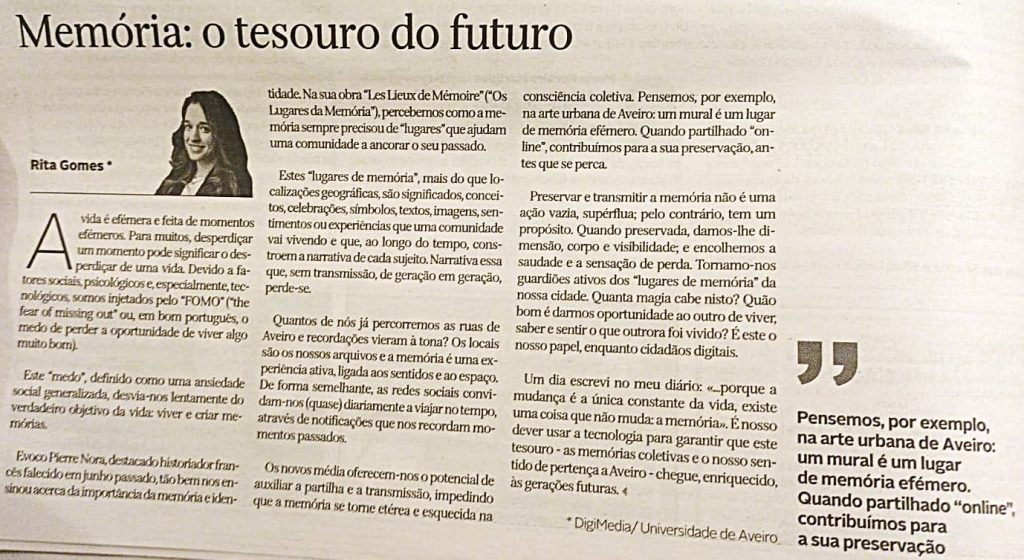
“Memória: o tesouro do futuro” is the newest article of the DigiMedia opinion column “Fronteira Digital” in the newspaper Diário de Aveiro, written by Rita Gomes, a PhD student in New Media. The text explores the issue of the preservation of memory in the digital age and can be read here.

The article “Fronteira Digital” can be read on the first Wednesday of every month in the printed version. This is an opportunity to show the local community the themes we work on and the research carried out at DigiMedia.

Our next text will be released on March 4, 2026.

DeCA hosted the 4th edition of the Seminar ‘Emerging Topics in Multimedia in Education’, organized by students from the Doctoral Programme in Multimedia in Education, with the involvement of Carlos Santos (DigiMedia) and Margarida Lucas (CIDTFF).

This year’s edition took place on 17th January, under the theme “Reimagining Innovation in Learning with Artificial Intelligence”, focusing on innovative practices incorporating Artificial Intelligence. The invited keynote speaker was Luís Borges Gouveia, from Fernando Pessoa University.

Dozens of teachers interested in the topic, as well as many researchers from DigiMedia and CIDTFF, attended the event.

More information about the whole event on Facebook and Instagram.

Our research at DigiMedia has been featured in the OECD Digital Education Outlook 2026, highlighting the social relevance and influence of our work in shaping global education policy.

The article Teacher professional development for a future with generative artificial intelligence – an integrative literature review , authored by the DigiMedia researchers Anabela Brandão, Luís Pedro and Nelson Zagalo, was cited in one of the articles of the OECD – Digital Education Outlook 2026: Exploring Effective Uses of Generative AI in Education.

Published by the Organization for Economic Co-operation and Development (OECD) in January 2026, the Digital Education Outlook 2026 report examines how generative artificial intelligence (GenAI) is transforming education, identifying evidence-based practices that enhance learning, teaching, and research. The report offers guidance for policymakers and education stakeholders on integrating AI tools responsibly and effectively within education systems worldwide.

DigiMedia’s work is therefore recognized within this international context for its contribution to digital education research that informs policy design and public decision-making. This acknowledgment reinforces DigiMedia’s role as a contributor to the societal impact of research and its relevance to ongoing global discussions on digital transformation in education.

Dalila Martins and Maria Júlia Vieira, PhD candidates in the Doctoral Program in New Media and members of the DigiMedia Research Centre, took part in the 15th International Conference on Videogame Sciences and Arts, held in Maia, Porto, (on December 4 and 5).

Dalila presented the paper “‘I ended up not playing more…’ A Design Model to Support Completion of Narrative Serious Games for Mental Health”, an article that is part of her doctoral research. The paper addresses the final version of the Optimal Engagement Model for narrative serious games in the context of mental health.

Maria Júlia Vieira presented the paper “Unveiling Hidden Pioneers: Carla Vieira Faria’s Legacy in Portuguese Digital Game History”, co-authored with researcher Luciana Lima, which won the conference’s Best Paper Award.

The PhD researchers also presented a collaborative paper, “Aloy’s Challenge to Gender Stereotypes in Contemporary Video Game Narratives”, which examines the representation of women in digital games through a qualitative analysis of players’ perceptions of Aloy, the protagonist of the game Horizon Zero Dawn (2017).

The conference brought together researchers and professionals from the field of games, providing opportunities for discussion, feedback, and the exchange of ideas.

The fourth article of the DigiMedia opinion column “Fronteira Digital” in the newspaper Diário de Aveiro was written by Catarina Feio, a PhD student in New Media, under the theme of news consumption.

Fronteira Digital: a conexão que prometia unir tornou-se a nossa maior divisão?” can be read here.

The article “Fronteira Digital” can be read on the first Wednesday of every month in the printed version. This is an opportunity to show the local community the themes we work on and the research carried out at DigiMedia.

Our next text will be released on February 4, 2026.

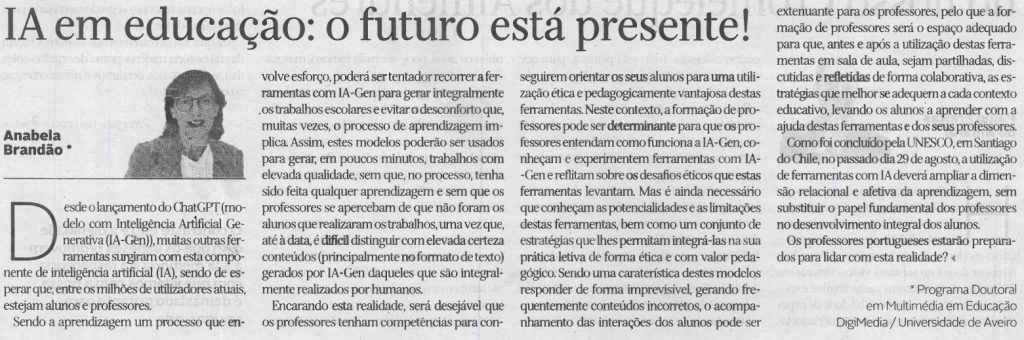
The third article of the DigiMedia opinion column “Fronteira Digital” in the newspaper Diário de Aveiro was written by Anabela Brandão, a PhD student in Multimedia in Education, under the theme “AI in education: the future is here!”.

This article can be read here.

The article “Fronteira Digital” can be read on the first Wednesday of every month in the printed version. This is an opportunity to show the local community the themes we work on and the research carried out at DigiMedia.

Our next text will be released on January 7, 2026.

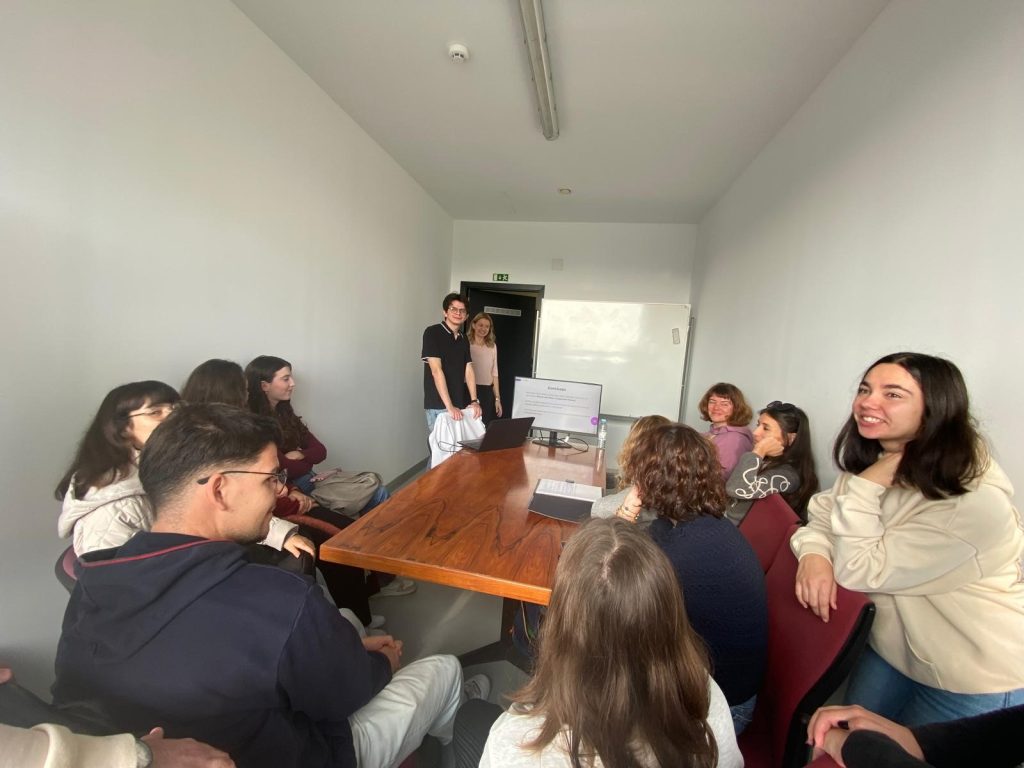
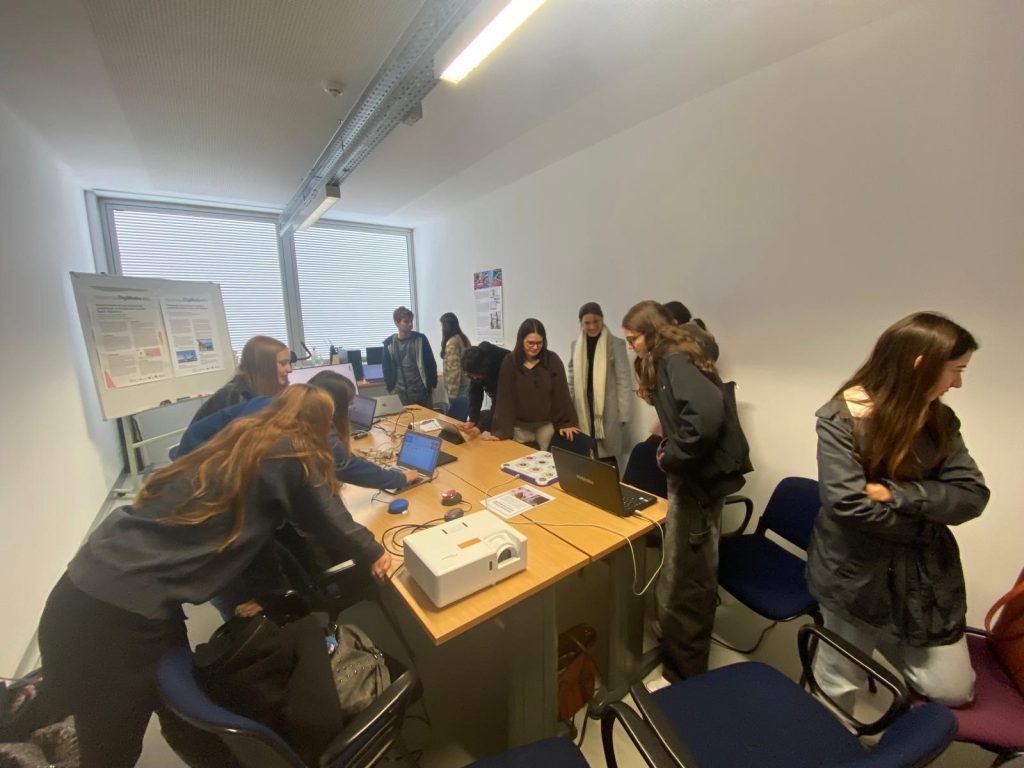
The UAInclusive laboratory team hosted approximately 25 students for a session dedicated to Assistive Technologies in Education, on November 19. This initiative was an invitation from the professor responsible for Curricular unit of “Neurodevelopment, Learning and Inclusion”, of the following Masters at the University of Aveiro: Master in Teacher Education – Pre-school education and 1st cycle of basic schooling; Master in Primary School Education and Mathematics and Natural Sciences in 2nd Cycle; Master in Primary School Education and Portuguese and History and Geography of Portugal in 2nd Cycle

In the first session, organized by the PhD student Francisca Lourenço, and the DigiMedia researchers Rita Oliveira and Oksana Tymoshchuk, students had the opportunity to learn about and experience various assistive resources and technologies available in the UAInclusive laboratory that support the teaching-learning process, as well as discuss pedagogical practices aimed at promoting accessibility and participation for all students.

On the other session, the PhD student, Lucius Vinicius-Filho, presented an inclusive prototype designed to support music education for children with Cerebral Palsy. The prototype, developed as part of his academic research, aims to support active participation in musical activities, promoting autonomy, creative expression, and greater accessibility in the learning process.

Participants also discovered several Virtual Reality projects developed at the XR Laboratory. These demonstrations were led by Professor Mário Varinhos, who highlighted how immersive technologies can be used for both teaching and research, and emphasized their transformative potential in educational contexts.

This initiative reinforces Digimedia and UAInclusive’s commitment to training future education professionals, contributing to the dissemination of knowledge and the construction of more inclusive and equitable educational environments.

Maria Vasconcelos, PhD student in New Media and member of DigiMedia Research Center, and her main supervisor, Catarina Lelis, attended the EUKO Annual Conference 2025, whose theme was “Storytelling in Business Communication”, and was held October 23-25, in London.

Maria presented the paper “From Stories to Sustainability: Exploring Tourism Narratives in Portugal’s Inland Regions,” which was part of her PhD research. The research analyzed two case studies, ADRIMAG (Associação de Desenvolvimento Rural Integrado das Serras do Montemuro, Arada e Gralheira) and Story Studio Accommodation Network, exploring how their communication strategies incorporate storytelling practices that reflect sustainability and regional identity. The presentation demonstrated how these narratives can enhance the visibility of local cultural and natural heritage while promoting responsible tourism practices that positively impact community development. The conference brought together researchers, professionals, and academics from diverse fields, providing opportunities for discussion, feedback, and the exchange of ideas on storytelling.

Skip to content