News

Explore the latest research insights.

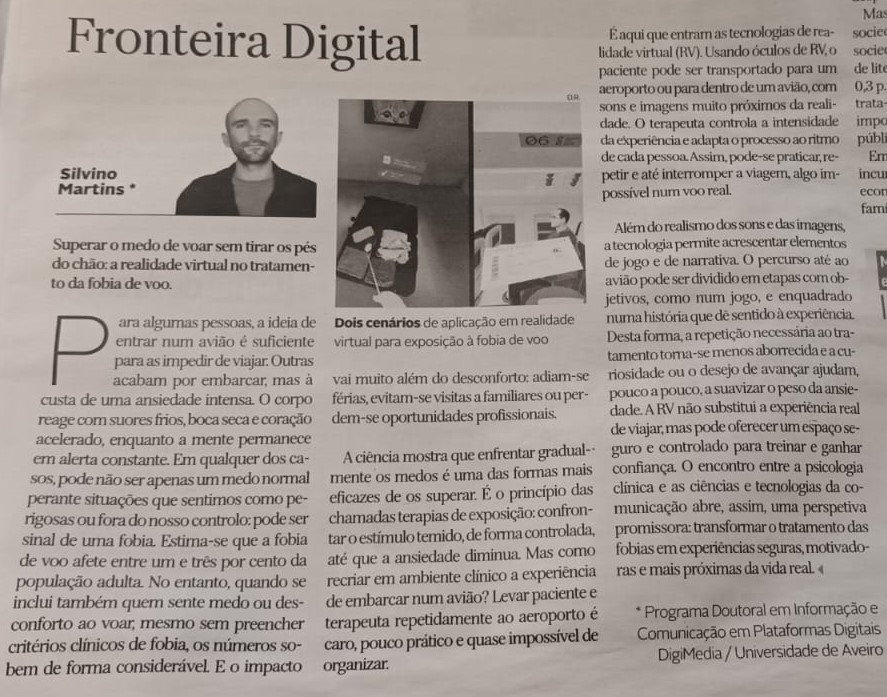
The second article of the DigiMedia opinion column “Fronteira Digital” in the newspaper Diário de Aveiro was written by Silvino Martins, a PhD student in Information and Communication in Digital Platforms, under the theme “Overcoming the fear of flying through virtual reality”.

The article “Fronteira Digital” can be read on the first Wednesday of every month in the printed version. This is an opportunity to show the local community the themes we work on and the research carried out at DigiMedia.

Our next text will be released on December 3rd.

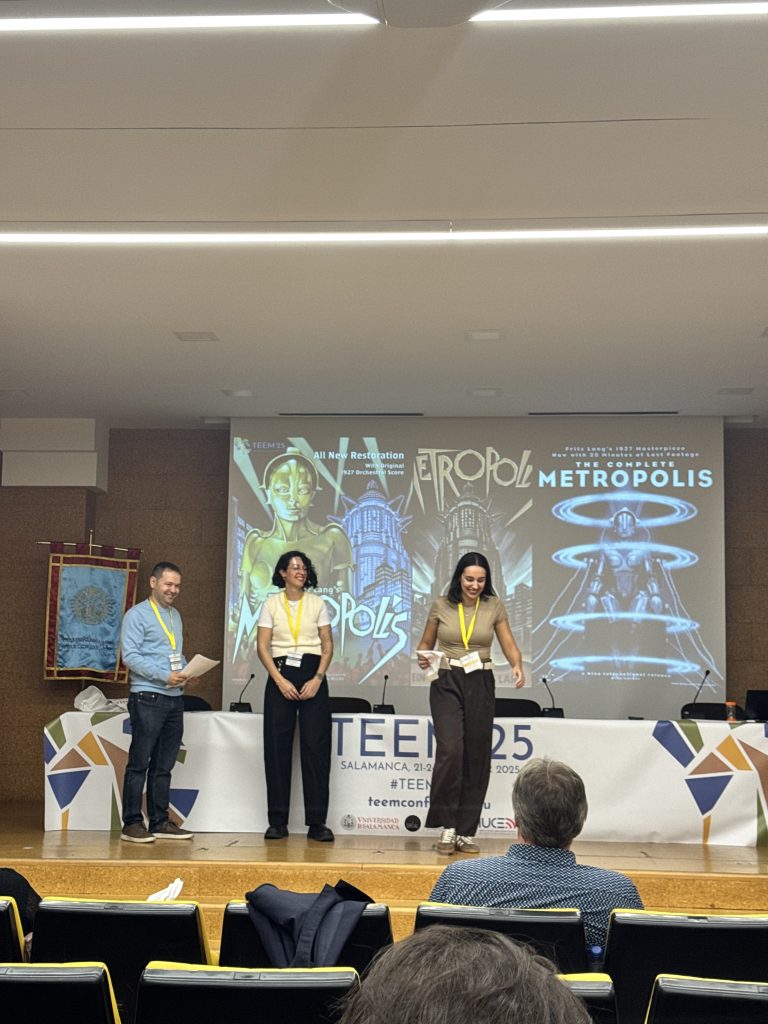
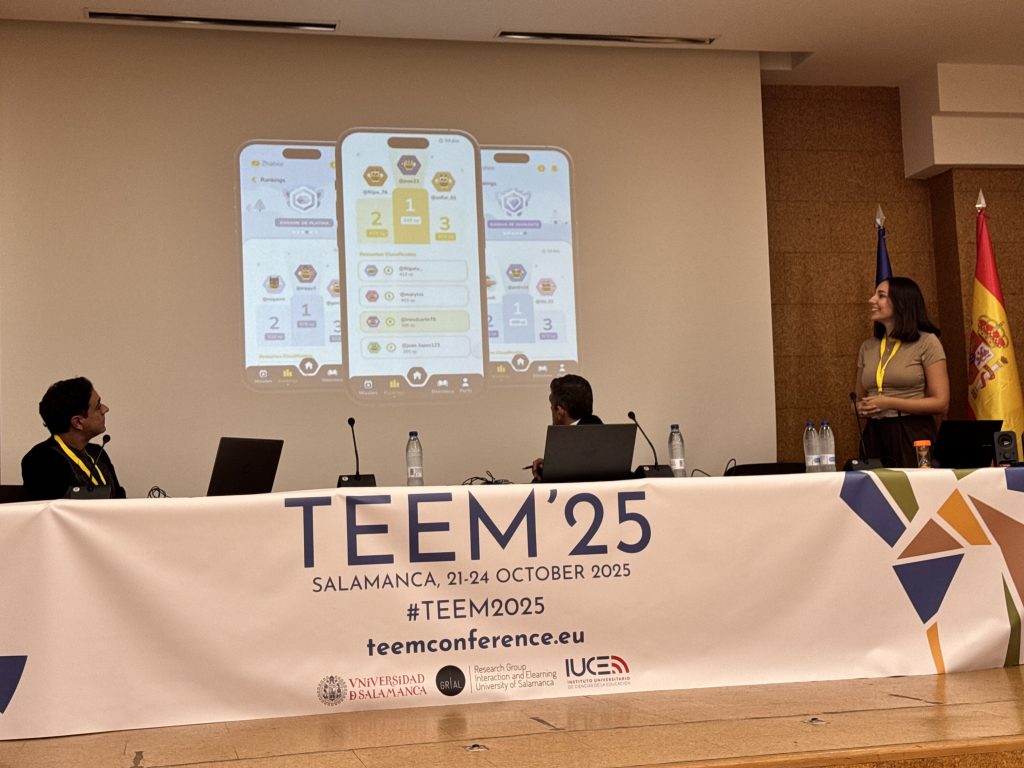
The paper “Zhabee: Empowering Teen Health Literacy through an Interactive App for Cancer Prevention”, presented at the 13th edition of the TEEM 2025 International Conference – Technological Ecosystems for Enhancing Multiculturality, received two awards: Best Paper and Best Presentation in Track 3 – Global Transformation in Healthcare: Integrating Cutting-Edge Technologies for a Multicultural Future.

The paper includes as co-authors two integrated researchers from DigiMedia, Ana Patrícia Oliveira and Telmo Silva, who supervised the final project in Multimedia and Communication Technologies that gave rise to this research.

The paper was presented at the conference by Sara Pombo, one of the co-authors. Henrique Policarpo and Marta Silva were also co-authors and members of the team that developed the project.

The Zhabee project aims to promote health literacy among teenagers through an interactive app for cancer prevention, combining user-centred design, gamification, and validated educational content.

This international distinction reinforces the excellence and visibility of DigiMedia in the field of interactive technologies applied to health and education.

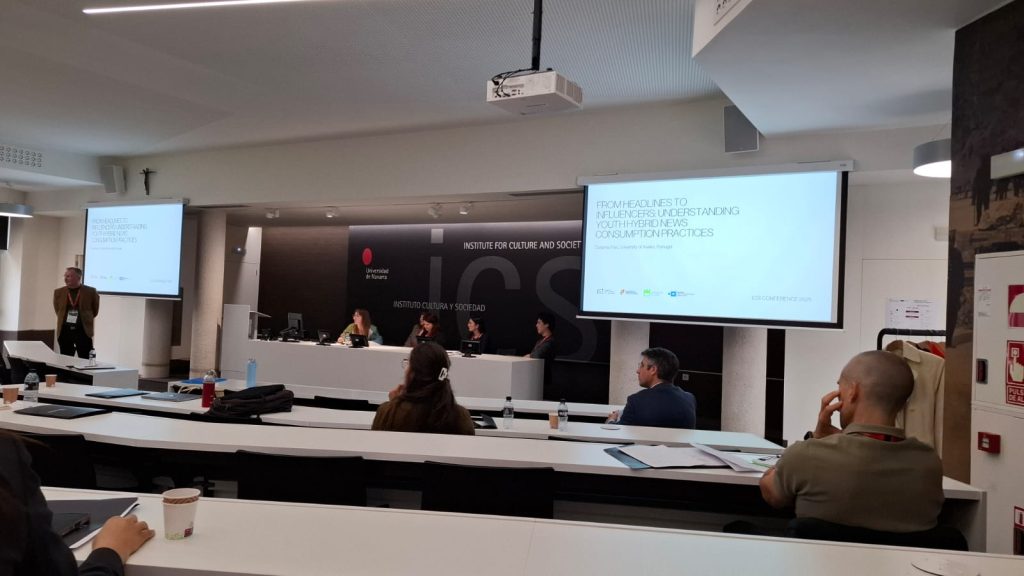
Catarina Feio, a student in the Doctoral Program in New Media, participated in the eighth biannual meeting of the “Overcoming Differences” section of ECREA’s Interpersonal Communication and Social Interaction . The event was co-organized by the Culture and Society Institute and the School of Communication at the University of Navarra. This event took place between September 24 and 26 at the University of Navarra in Pamplona. The PhD student presented the paper: “From Headlines to Influencers: Understanding Youth Hybrid News Consumption Practices,” which focuses on the question of the new opinion leaders on social media and their role as broadcasters of information and opinion to a young audience.

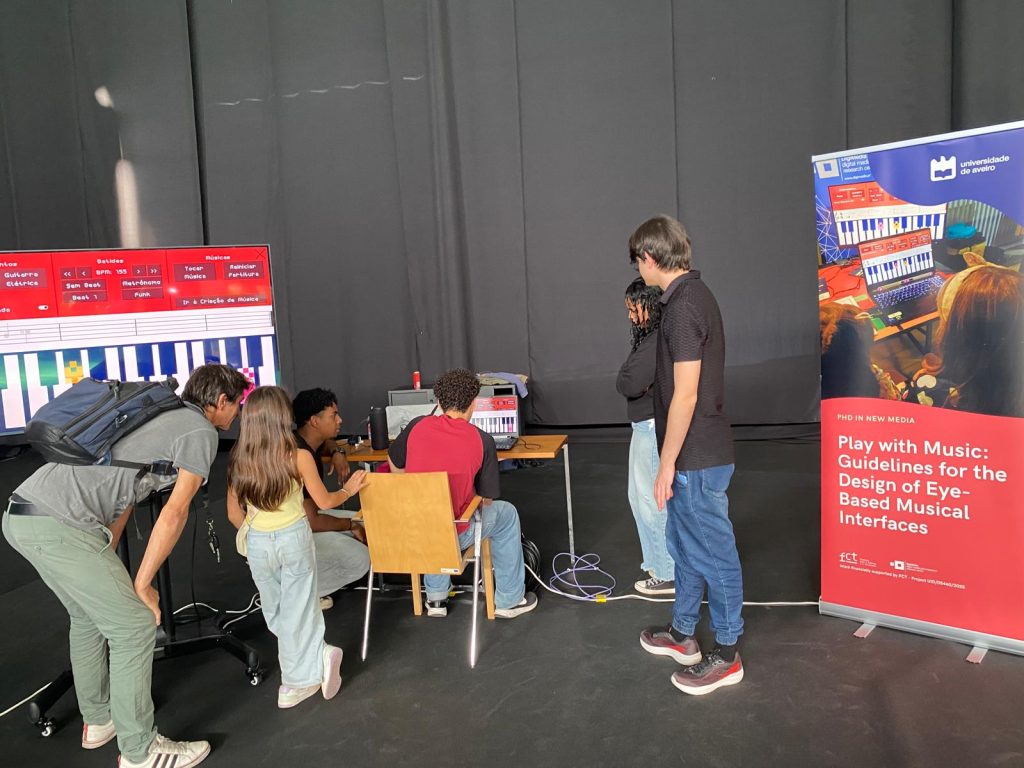
During the Aveiro Tech Week 2025, held from 6th to 12th October, the PhD student Lucius Filho presented his doctoral project entitled “Guidelines for the Design of Gaze-Based Musical Interfaces,” funded by Foundation for Science and Technology.
The presentation session took place on October 11, as part of the event’s program dedicated to the game.

Visitors had the opportunity to try out an interactive prototype developed as part of the Master’s in Digital Game Development, a research area that the doctoral program continues to explore. The prototype allowed volunteers to create a digital musical composition using their gaze through an eye tracker.

On October 7, during Aveiro Tech Week 2025, the Zhabee project was presented as part of the Exhibition of Technological Innovations of the University of Aveiro. The project was developed by students Henrique Policarpo, Marta Silva, and Sara Pombo as their final project for the Bachelor’s Degree in Multimedia and Communication Technologies (DeCA-UA) during the 2024/2025 academic year. The work was supervised by DigiMedia researchers Ana Patrícia Oliveira and Telmo Silva.

Zhabee is an interactive digital application designed to promote health literacy and cancer prevention among teenagers aged 13 to 16. Combining communication design, gamification, and web technology, the project aims to encourage healthy habits in an engaging, playful, and scientifically grounded way, aligning with the United Nations Sustainable Development Goals (SDGs), particularly SDG 3 (Good Health and Well-Being) and SDG 4 (Quality Education).


During the event, participants had the opportunity to try a functional version of the mobile application and to take part in interactive activities focused on healthy lifestyle habits, showcasing the potential of design and technology in promoting healthy behaviors and raising awareness about cancer prevention.

The Zhabee project demonstration reinforced the role of the University of Aveiro as a hub of innovation, research, and community engagement, highlighting how science and creativity are shaping the future through technological solutions with positive social impact.

DigiMedia has a new column in the local newspaper Diário de Aveiro. The article “Fronteira Digital” can be read on the first Wednesday of every month in the printed version. This is an opportunity to show the local community the themes we work on and the research carried out at DigiMedia.

Our first article was written by Raquel Magalhães, a PhD student in Information and Communication in Digital Platforms.

Our next text will be released on November 5th.

On the 26th of September, several members from DigiMedia were present at BlueNIGHTs 2025, joining the celebration of the European Researcher’s Night at the small fisherman village of Torreira (Murtosa). Daniela Figueiredo (post-doc researcher at DigiMedia), along with Leonardo Fernandes (Master student in Digital Game Development), João Costa and Márcia Lima (PhD students from Multimedia in Education) had the opportunity to share with the local community several activities focusing on young people (from gamification approaches to VR, but also animation, multimedia & music). More than 300 students from local schools came to the event. It was a day full of Science, Research and Emotions, with the opportunity to meet researchers from several other research units from the University of Aveiro. Next year, they hope to be back for BlueNIGHTs Torreira 2026! More details here.

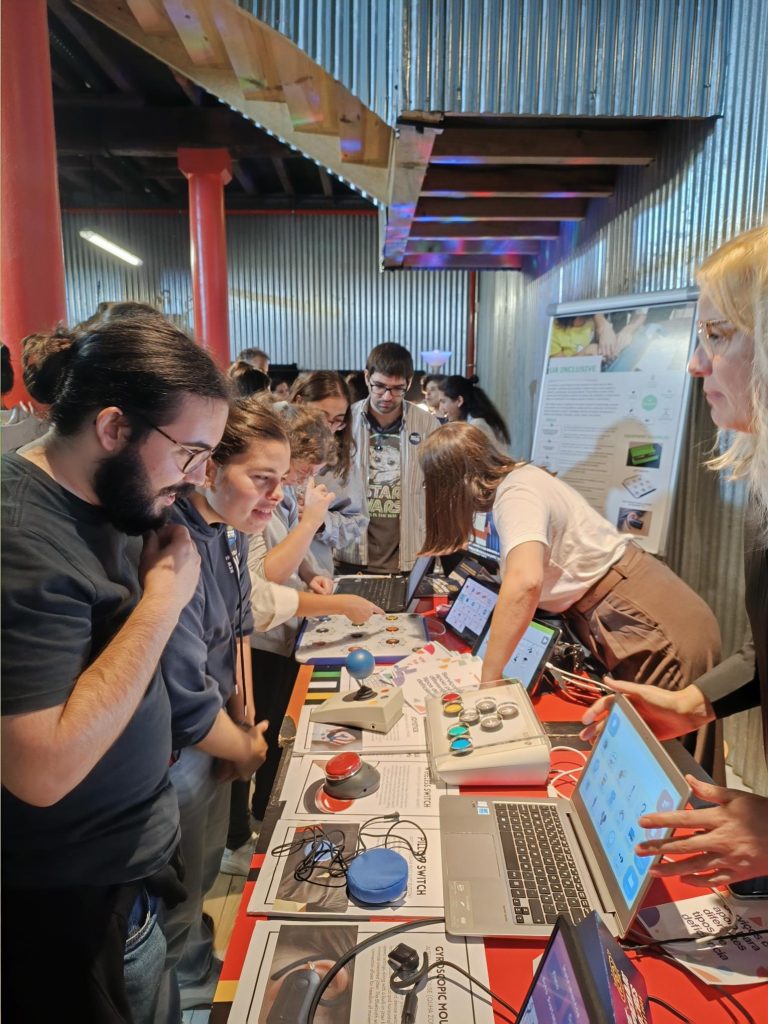
During the European Researchers’ Night, the Lab Inclusive Space from Digimedia presented two demonstrations, making research more visible and accessible to the public. One of the projects showcased was Communication Processes for Inclusive Academic Spaces (Francisca Lourenço, Rita Oliveira, Oksana Tymoshchuk, Ana Isabel Veloso), which explores methodologies and practices to make university environments more accessible and welcoming. Alongside it, the team also presented the Educational Game with Eye-Tracking for Children with Cerebral Palsy (Lucius Vinicius Filho, Oksana Tymoshchuk, Rita Oliveira, Nelson Zagalo), which combines eye-tracking technology with pedagogical design to foster adaptive and inclusive learning experiences. At the Fábrica de Ciência Viva in Aveiro, the demos were presented and supported by the researchers Francisca Lourenço, Lucius Filho, Oksana Tymoshchuk, Rita Oliveira, and Ana Patrícia Oliveira.

The participation of these projects in the Researchers’ Night was an excellent example of knowledge transfer to society. By showing how research can respond to concrete needs, the initiative promotes the dissemination of science and strengthens the role of research as a driver of social impact, generating inspiration, engagement, and awareness of the value of science in everyday life.

The Department of Communication and Art at the University of Aveiro hosted the first summer school of the Erasmus+ ABRAXAS project, an event focused on sharing knowledge and results under the theme “VR for Designers”. This initiative, organized by DigiMedia members Rui Raposo and Mário Vairinhos, aimed to test and validate the teaching materials and virtual reality applications developed within the project.

Students, faculty, and researchers from the University of Aveiro, Lodz University of Technology, the University of Vigo, and the Miguel Hernández University of Elche participated in this week-long summer school, from September 8th to 12th.

This event provided a dynamic and practical learning environment, where participants had the opportunity to interact with the new content and applications, participating in exercises and workshops. In addition to the practical sessions, the agenda included seminars by the PhD students in Information and Communication on Digital Platforms, Pedro Reisinho, Silvino Almeida, Rúben Carvalho, and Maria de Jesus Ferreira and a seminar by Bernardo Marques (DETI).

During the week, participants also had time to enjoy the city of Aveiro, socialize, create new friendships, and discuss possible future collaborations. They highlighted the inspiring atmosphere and valuable exchange of experiences, and the organizers believe the experience contributed to the improvement of the ABRAXAS project’s content.

For more information about the project, please visit the website.

Photos by Krzysztof Pagacz.

Rita Gomes, a researcher at Digimedia and a PhD candidate in the New Media doctoral program at the University of Aveiro, participated as a speaker at the 12th edition of the Urban Creativity conference. The event took place at the Faculty of Fine Arts of the University of Lisbon, from July 3rd to 5th, 2025.

Her participation aimed to present key findings from a part of her doctoral research, while simultaneously strengthening ties with the academic community and fostering dialogue on the preservation of intangible cultural heritage in urban art.

The researcher presented the article entitled “Cultural Mapping in Street Art: A Systematic Literature Review,” in which she sought to offer a comprehensive overview of current cultural mapping practices, exploring the benefits, possibilities, and experiences resulting from the application of this methodology to urban art. The research highlighted the application of cultural mapping to various urban resources and artistic expressions, such as graffiti, public art, and photography, emphasizing the potential of this approach in documenting community interaction with urban space and enhancing the sense of place.

For Rita Gomes, the conference was an “excellent opportunity to meet other researchers who share the same passions as me, with whom I had the chance to validate the findings of my study, which underscore the urgent need for greater representation of graffiti and street art in academic research.”

Rita Gomes adds: “Cultural mapping is a powerful tool to give visibility to this art form and to safeguard cultural heritage before it’s too late — and it is crucial that the academic community, including Digimedia as an institution that contributes to the study of digital media, comes together to bridge this gap.”

The Urban Creativity 2025 conference, which adopted a fully hybrid model, is internationally recognized as a crucial forum for discussing and exploring topics related to urban creativity, design, public art, and the impact of artistic interventions in cities.

Photo by Urban Creativity.

Skip to content