
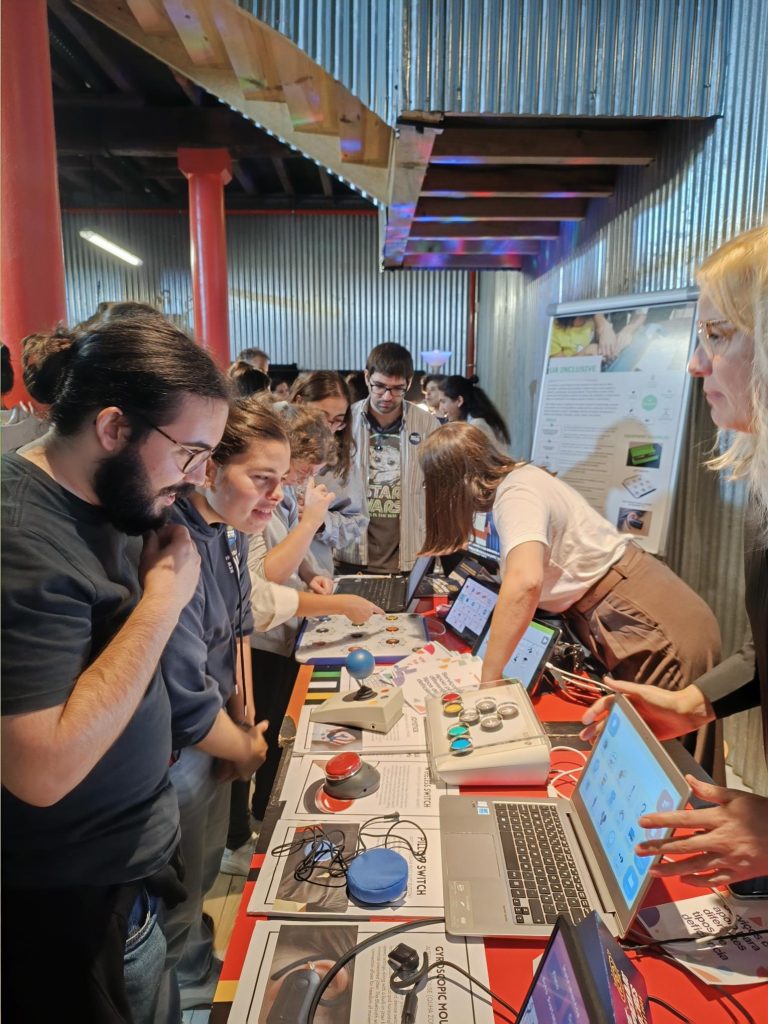
During the European Researchers’ Night, the Lab Inclusive Space from Digimedia presented two demonstrations, making research more visible and accessible to the public. One of the projects showcased was Communication Processes for Inclusive Academic Spaces (Francisca Lourenço, Rita Oliveira, Oksana Tymoshchuk, Ana Isabel Veloso), which explores methodologies and practices to make university environments more accessible and welcoming. Alongside it, the team also presented the Educational Game with Eye-Tracking for Children with Cerebral Palsy (Lucius Vinicius Filho, Oksana Tymoshchuk, Rita Oliveira, Nelson Zagalo), which combines eye-tracking technology with pedagogical design to foster adaptive and inclusive learning experiences. At the Fábrica de Ciência Viva in Aveiro, the demos were presented and supported by the researchers Francisca Lourenço, Lucius Filho, Oksana Tymoshchuk, Rita Oliveira, and Ana Patrícia Oliveira.
The participation of these projects in the Researchers’ Night was an excellent example of knowledge transfer to society. By showing how research can respond to concrete needs, the initiative promotes the dissemination of science and strengthens the role of research as a driver of social impact, generating inspiration, engagement, and awareness of the value of science in everyday life.



