DigiMedia has a new column in the local newspaper Diário de Aveiro. The article “Fronteira Digital” can be read on the first Wednesday of every month in the printed version. This is an opportunity to show the local community the themes we work on and the research carried out at DigiMedia.
Our first article was written by Raquel Magalhães, a PhD student in Information and Communication in Digital Platforms.
On the 26th of September, several members from DigiMedia were present at BlueNIGHTs 2025, joining the celebration of the European Researcher’s Night at the small fisherman village of Torreira (Murtosa). Daniela Figueiredo (post-doc researcher at DigiMedia), along with Leonardo Fernandes (Master student in Digital Game Development), João Costa and Márcia Lima (PhD students from Multimedia in Education) had the opportunity to share with the local community several activities focusing on young people (from gamification approaches to VR, but also animation, multimedia & music). More than 300 students from local schools came to the event. It was a day full of Science, Research and Emotions, with the opportunity to meet researchers from several other research units from the University of Aveiro. Next year, they hope to be back for BlueNIGHTs Torreira 2026! More details here.
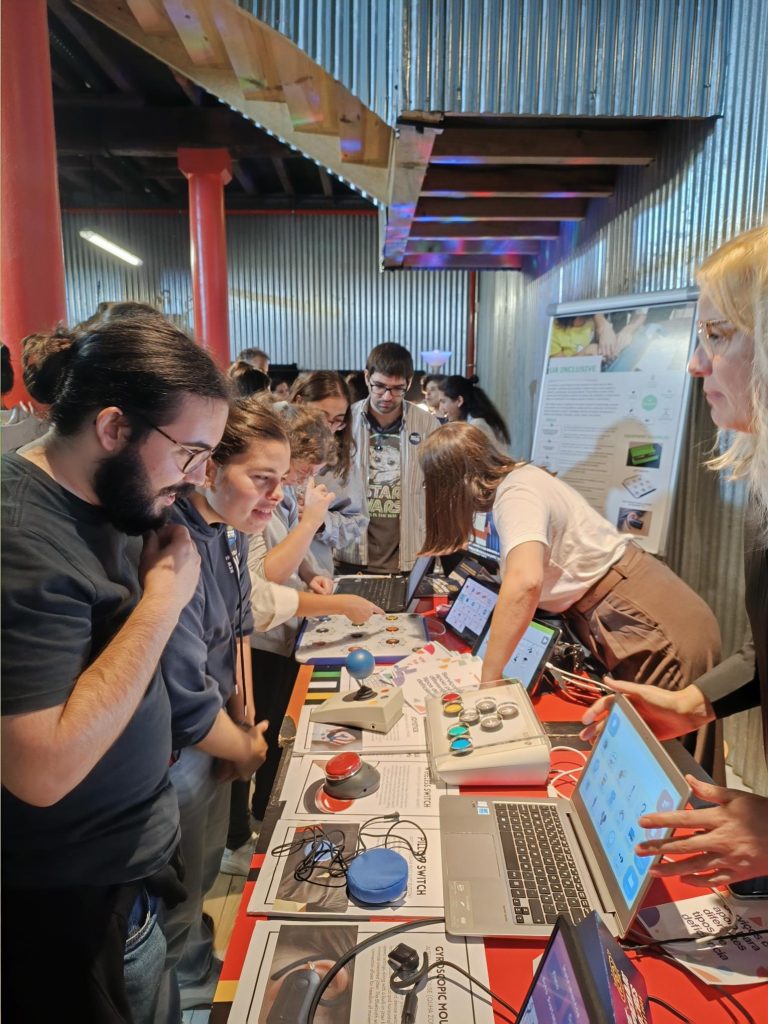
During the European Researchers’ Night, the Lab Inclusive Space from Digimedia presented two demonstrations, making research more visible and accessible to the public. One of the projects showcased was Communication Processes for Inclusive Academic Spaces (Francisca Lourenço, Rita Oliveira, Oksana Tymoshchuk, Ana Isabel Veloso), which explores methodologies and practices to make university environments more accessible and welcoming. Alongside it, the team also presented the Educational Game with Eye-Tracking for Children with Cerebral Palsy (Lucius Vinicius Filho, Oksana Tymoshchuk, Rita Oliveira, Nelson Zagalo), which combines eye-tracking technology with pedagogical design to foster adaptive and inclusive learning experiences. At the Fábrica de Ciência Viva in Aveiro, the demos were presented and supported by the researchers Francisca Lourenço, Lucius Filho, Oksana Tymoshchuk, Rita Oliveira, and Ana Patrícia Oliveira.
The participation of these projects in the Researchers’ Night was an excellent example of knowledge transfer to society. By showing how research can respond to concrete needs, the initiative promotes the dissemination of science and strengthens the role of research as a driver of social impact, generating inspiration, engagement, and awareness of the value of science in everyday life.
The Department of Communication and Art at the University of Aveiro hosted the first summer school of the Erasmus+ ABRAXAS project, an event focused on sharing knowledge and results under the theme “VR for Designers”. This initiative, organized by DigiMedia members Rui Raposo and Mário Vairinhos, aimed to test and validate the teaching materials and virtual reality applications developed within the project.
Students, faculty, and researchers from the University of Aveiro, Lodz University of Technology, the University of Vigo, and the Miguel Hernández University of Elche participated in this week-long summer school, from September 8th to 12th.
This event provided a dynamic and practical learning environment, where participants had the opportunity to interact with the new content and applications, participating in exercises and workshops. In addition to the practical sessions, the agenda included seminars by the PhD students in Information and Communication on Digital Platforms, Pedro Reisinho, Silvino Almeida, Rúben Carvalho, and Maria de Jesus Ferreira and a seminar by Bernardo Marques (DETI).
During the week, participants also had time to enjoy the city of Aveiro, socialize, create new friendships, and discuss possible future collaborations. They highlighted the inspiring atmosphere and valuable exchange of experiences, and the organizers believe the experience contributed to the improvement of the ABRAXAS project’s content.
For more information about the project, please visit the website.
Rita Gomes, a researcher at Digimedia and a PhD candidate in the New Media doctoral program at the University of Aveiro, participated as a speaker at the 12th edition of the Urban Creativity conference. The event took place at the Faculty of Fine Arts of the University of Lisbon, from July 3rd to 5th, 2025.
Her participation aimed to present key findings from a part of her doctoral research, while simultaneously strengthening ties with the academic community and fostering dialogue on the preservation of intangible cultural heritage in urban art.
The researcher presented the article entitled “Cultural Mapping in Street Art: A Systematic Literature Review,” in which she sought to offer a comprehensive overview of current cultural mapping practices, exploring the benefits, possibilities, and experiences resulting from the application of this methodology to urban art. The research highlighted the application of cultural mapping to various urban resources and artistic expressions, such as graffiti, public art, and photography, emphasizing the potential of this approach in documenting community interaction with urban space and enhancing the sense of place.
For Rita Gomes, the conference was an “excellent opportunity to meet other researchers who share the same passions as me, with whom I had the chance to validate the findings of my study, which underscore the urgent need for greater representation of graffiti and street art in academic research.”
Rita Gomes adds: “Cultural mapping is a powerful tool to give visibility to this art form and to safeguard cultural heritage before it’s too late — and it is crucial that the academic community, including Digimedia as an institution that contributes to the study of digital media, comes together to bridge this gap.”
The Urban Creativity 2025 conference, which adopted a fully hybrid model, is internationally recognized as a crucial forum for discussing and exploring topics related to urban creativity, design, public art, and the impact of artistic interventions in cities.
In this event, which took place from 11th to 15th August, Vanessa Pinto presented her international mobility experience at the University of Aveiro, in a partnership between DigiMedia and the Federal University of Rio de Janeiro.
The researcher had the opportunity to talk about the work that began during the exchange and is still ongoing. She also emphasized that international mobility offers a rich cross-cultural exchange, essential for growth both academically and personally.
Maria Júlia Vieira and Catarina Feio, PhD students in New Media and members of DigiMedia Research Center, attended the 7th Sopcom Young Researchers Meeting, held on July 9, 2025, at the Fernando Pessoa University in Porto.
During the event, Maria Júlia presented a poster entitled “Harassment and Toxic Culture in Video Game Live Streaming: Challenges and Proposals for a More Inclusive Environment”. Her presentation was featured in the poster session, which showcased innovative research into communication, digital culture and inclusion.
Catarina Feio presented the communication: “Youth, News and Social Media – the News Consumption Practices of Young People in Portugal”, part of her PhD research. The talk was part of the session on “Audiences and News”.
The meeting brought together young researchers from all over the country, encouraging the exchange of knowledge and debate on emerging communication issues, with sessions dedicated to visual culture, digital literacies, journalism and society.
The participation of Maria Júlia and Catarina Feio highlights the commitment of DigiMedia and the PhD Program in New Media in promoting research with social impact and relevance.
Malmö University in Sweden hosted the 7th edition of the AI and Games Summer School. Among the participants was Cláudia Vale Oliveira, a student in the New Media PhD Program and a researcher at DigiMedia, who participated in this edition marked by innovation, creativity, and critical reflection on the role of artificial intelligence (AI) in gaming.
During five days, engineers, programmers, researchers, and game designers from both academia and industry shared knowledge and discussed the latest trends and influences in the use of AI in game development. The researcher from the University of Aveiro (UA), in addition to perspectives on player experience and interaction with agents through natural language processing, particularly highlighted the role of generative AI in the creative process and the ethical issues and challenges that artificial intelligence raises in game development. Issues such as authorship, boundaries, and ethical responsibility reinforce the importance of training professionals who are aware and critical of the possibilities and risks of AI integrated into interactive design. She also emphasized that it was “an incredible and inspiring week,” an experience she found “both engaging and challenging.”
In the final days of the event, participants were challenged to participate in the Game Jam. In this context the researcher Cláudia Oliveira and her team developed the Baloonce prototype, a collaborative game that aims to create balance, combating the sedentary lifestyle and burnout associated with professions like gaming developers, designers, and researchers, exploring the importance of moving and coordinating the body in a world where the mind and digital world are pushed to their limits. The project stood out among the participating teams, being selected as the best project of the Game Jam, a recognition that highlights the talent and capabilities of those involved. The project will soon be shared on Github.
This event was guided by leading figures in the field, such as Georgios N. Yannakakis, Julian Togelius, co-authors of the book Artificial Intelligence and Games, and Antonios Liapis. It was made possible thanks to the support of King, the UA, and DigiMedia, which provided the doctoral student with the opportunity to participate in this international summer school.
For the UA community, this participation represents not only an opportunity to enrich the student’s curriculum, but also a contribution to the development of new lines of research in the fields of new media, immersive games, experience design, and the ethics of artificial intelligence.
Project n. 15 – Design an accessible flyer to support people with disabilities
About the project
This project aims to develop two accessible and informative flyers with the aim of promoting inclusion and awareness about disability and incapacity. It aims to support people with disabilities, their families, caregivers and professionals, and the community in general, by providing clear information about the different types of disability, technological resources, support services and inclusion strategies available in the country and at the University of Aveiro. It also aims to foster a culture of equal opportunities and active participation in society.
Participants
This project is coordinated by Francisca Lourenço (PhD student), with the participation of:
Rita Oliveira (DigiMedia researcher) Oksana Tymoshchuk (DigiMedia researcher) Anda-Elena Covaci (1st cycle degree in Multimedia and Communication Technologies) Mariana Veiga (Master in Communication and Web Technologies)
What do you expect from participating in the initiative?
“I hope to give visibility to the community of people with disabilities, acquire useful tools and knowledge for my academic life, and contribute to inclusion through a practical and impactful project” (Mariana)
“May this initiative bring more autonomy where it makes all the difference” (Anda-Elena Covaci)
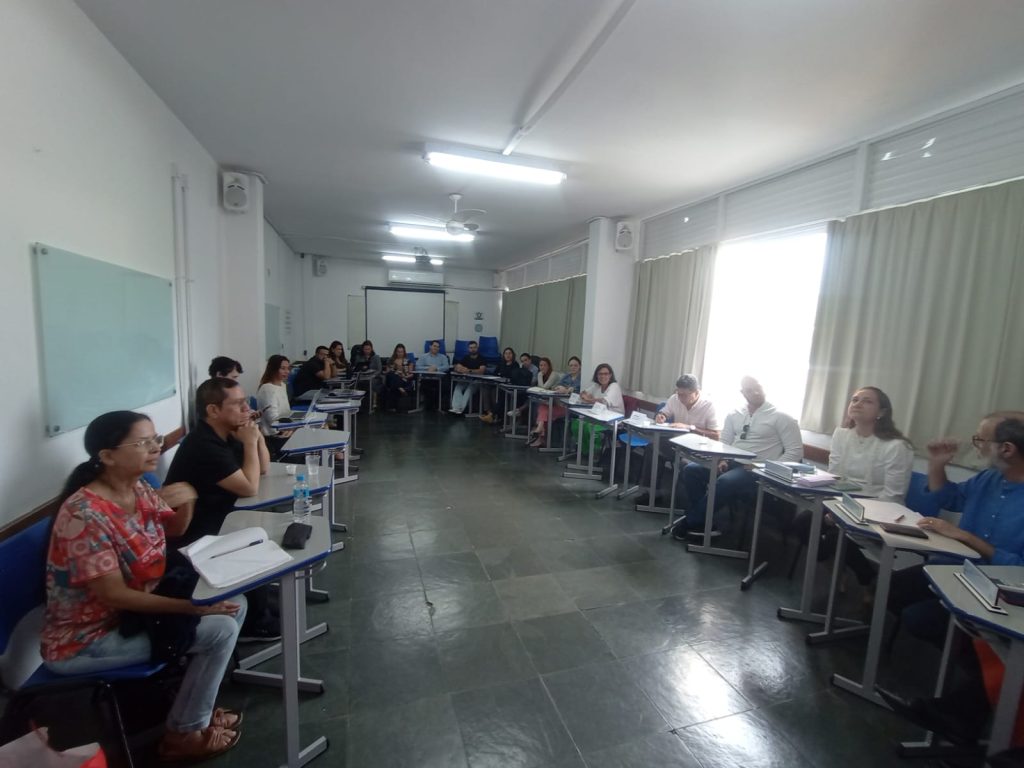
The Conference ACM IMX 2025, co-organized by the University of Aveiro and the Universidade Federal Fluminense (Brazil), took place between 3rd and 6th June 2025, in Niterói, Rio de Janeiro, Brazil.
Jorge Ferraz Abreu, a Digimedia researcher, was one of the General Chairs of this conference, along with other members of the DigiMedia team: Pedro Almeida (demo chair), Telmo Silva and Carlos Santos (Web Chairs), Juliana Camargo (Publicity Chair) and Ana Velhinho (Acessibility Chair).
The conference had 22 full papers, 17 WiP, 17 Demos, 1 industry talk, and the participation of 6 doctoral students and 3 keynote speakers.