News

Explore the latest research insights.

Representing DigiMedia, the post-doctoral researcher Ana Velhinho,  won a fellowship from Freepik to attend between the 2nd and 7th of September a Summer School in Málaga (Spain), dedicated to the sustainability and etics of AI in Digital Humanities, relevant to the research within the ongoing project Polariscope, a Platform for the Co-creation and Visualization of Collective Memories.

The 8th Digital Art History Summer School (DAHSS 2024) occurred at the Polo de Contenidos Digitales of Fundación Telefónica. This year’s theme was “Sustainability and Politics of AI”, with sessions organized around four tracks, led by the four speakers of this edition:

  • “Track A: Visual AI for Visual Culture. New tools/old critique”, by Leonardo Impett (University of Cambridge), focused on applications of AI and computer vision, looking at how we might use generative image systems like Midjourney and DALL·E for visual culture and art history studies;
  • “Track B: Art on the Web: Creating Cultural Heritage Knowledge Networks”, by Edward Anderson (Rijksmuseum), focused on standardized models and vocabularies of the Semantic Web (e.g., OWL-Web Ontology Language; RDF-Resource Description Framework) for enhancing the accessibility and richness of cultural heritage data and fostering collaboration;
  • “Track C: Cartographies of Humanities”, by Iacopo Neri (University of Zurich and Institute for Advanced Architecture of Catalonia) focused on spatial analytics of geodata and cartography, working with open-source software and creative coding for mapping ecological and social dynamics at various scales;
  • Track D: The Archive Makes the Image”, by Eryk Salvaggio (independent researcher and artist, former fellow of the Flickr Foundation), focused on how to read images made by artificial intelligence systems and how AI training datasets and heritage archives and collections shape those generated images, based on a critique of the algorithmic curation and production of synthetic content.

The event was organized by Nuria Rodríguez-Ortega, Professor of the University of Málaga and founder of the iArtHIs_Lab research group, and Bárbara Romero Ferrón, a researcher at this lab and the CulturePlex Lab (Western University). DAHSS 2024 had 24 participants from several countries and institutions, consolidating a network of researchers to strengthen ongoing projects and foster upcoming ones.

Digimedia member Catarina Lelis was one of the University of Aveiro’s lecturers selected to represent the institution at the ECIU University Forum 2024, in Kaunas, Lithuania. Under the theme “Education for a sustainable and resilient society”, the meeting raised a few questions and proposed multiple ways to find answers. The event constituted a significant step towards shaping the future of education and innovation. It was an opportunity to create and consolidate relationships and reinforce the power of the community involved in the project.

In a global meeting where “impact” was the leading word, it made sense to share with the ECIU community The Impact Plan, introducing participants to a framework that helps individuals in better aligning their desired repertoire of skills and project ambitions (their WHYs) with the UN SDGs and the three main sustainability dimensions: environmental, economic and social. A small and promising network seems to have emerged from this meeting.

Juliana Camargo, Pedro Almeida and Jorge Abreu presented their work at the IMX’24 (ACM Interactive International Conference on Interactive Media Experiences) in Stockholm:

. Always together: combining TV notifications and voice interactions to connect older adults to other generations: access here.

. Remixing and repurposing cultural heritage archives through a collaborative and AI-generated storytelling digital platform: access here

Juliana was also awarded a travel grant from SIGMM Student Travel Awards.

Three projects won the four awards of Media Play’24: Rehamind, Twovest and et-cetera.

Media Play’24 had 13 projects in the competition, which were developed by our students, within the Multimedia area and show new apps, games, digital platforms, or UX prototypes.

The voting process was open to everyone, upon registration.

Get to know more about the winning projects below.

The Rehamind Project won the Public Award (votes from the general public: students, faculty members, researchers, etc), sponsored by DigiMedia.

Sérgio oliveira is the author of Rehamind –  Virtual Reality Serious Game for stroke rehabilitation at home.  Stroke is one of the main causes of death and disability worldwide, with consequences that can lead to physical and cognitive disabilities. Rehabilitation plays a central role in the lives of survivors. This work proposes the use of Virtual Reality and Serious Games as a complementary methodology for cognitive and upper limb rehabilitation of stroke survivors. By combining these tools, it is possible to create virtual environments that stimulate real-life activities, as well as immersion and interaction with virtual objects, following narratives based on everyday tasks, with which survivors can relate with.

The Twovest project won the Academia Award (votes from faculty members and researchers of STC), sponsored by DigiMedia).

Vasco Saraiva, Jónatas Roque, Gonçalo Calçada, João Paixão, Daniela Silva and Margarida Bicho are the authors of Twovest, which is an e-commerce platform for clothes’ selling that focuses on the second-hand market and guarantees its customers the authenticity and quality of all items. In addition to offering a wide variety of products and brands, you can also create customizable collections where you save the inspirations you see in our community’s look gallery. In addition, it is possible to unlock new offers and coupons by interacting in the gallery or making new purchases. At Twovest, our goal is to help brands actively contribute to sustainability. And you benefit from that.

The et.cetera project won both the Professional Award (votes from the business representatives), sponsored by AlticeLabs, and the Disruptive award (votes from faculty members, researchers, and business representatives), (sponsored by Ubiwhere).

Carolina Batista, Gabriel Ribeiro, Inês Sucena, Lara Mendes, Leonardo Coelho and Nathália Magalhães are the authors of et.cetera, which is a home management platform that allows the creation of collaborative shopping lists, using or not Artificial Intelligence. Additionally, it allows all members of the household to keep their bills up to date, thanks to the expense’s functionality, integrated with expenses associated with purchases.

Media Play’24, organized by DigiMedia, took place on May 29, with more than 125 people attending the event to meet the participants and their Multimedia Projects, such as apps, games, digital platforms, and UX prototypes.

This second edition of Media Play presented 13 projects developed by students within the scope of the courses of Sciences and Technology Communication (CTC), in the Department of Communication and Art (DeCa) in the University of Aveiro.

Six local technology companies were also present in the event, to bring their vision of the business sector into the academic world. The representatives of Ubiwhere, AlticeLabs, Loba, Mindera, Mog, Tice and Fundação Altice had the opportunity to meet the students involved and their projects.

The best projects, voted by the people attending the event, were awarded with different prizes.

The winning projects were:

Professional Award (sponsored by AlticeLabs) : et.cetera 

Disruptive award (sponsored by Ubiwhere): et.cetera

Public Award (sponsored by DigiMedia) : Rehamind

Academia Award (sponsored by DigiMedia): Twovest

More information on the Media Play’24 winners, soon!

Know more about all the participants of Media Play’24 here.

More photos in our social networks:

https://www.facebook.com/UADeCA/posts/pfbid02VZKeMegj7cXsLj1RBSstiGmLySQ7C8m6rxswVoP6PqudtgR71TWz3HDWxxAgdNgYl

https://www.instagram.com/p/C7oFl22ohbG/?img_index=1

A seminar and a workshop on AI Tools Applied to Scientific Research, led by Professor Xabier Martínez-Rólan, from the University of Vigo, was held online on the 18th April.

This event took place in two moments. The seminar was an initiative of the Media Innovation Circle,  that gave participants the opportunity to delve deeper into AI’s impact on our reality. Then, 14 participants attended a workshop, organized by the DigitalOBS team, that enhanced their understanding of how AI tools can be effectively used in scientific research, thereby elevating their potential for groundbreaking opportunities in this field.

The DigiMedia and DigitalOBS members agree that this event was a success and say they “ hope that all participants leave all the works feeling invigorated, inspired, and equipped with fresh knowledge that will serve as a solid foundation for constructing even more profound and meaningful connections in the future”. The team also mentions that “as a collective, we are dedicated to building a path toward scientific knowledge that is not only characterized by excellence but also defends principles of ethics and equity”.

For the seventh time, the University of Aveiro hosted the Global Game Jam – the largest game creation event in the world, involving thousands of participants (jammers) from more than 100 countries, which this year took place .

Organised by teachers and students from the Master’s in Digital Games Development (MDJD), this year’s edition – which took place at the Complexo das Ciências da Comunicação e Imagem (CCCI) and was supported by the DeCA, DigiMedia and IT Telecommunications Institute – had more than 40 participants, including students from DeCA, DeTI and IPCA (among others).

Before the game creation marathon, the participants had the chance to take part in a vast programme of workshops in the fields of multimedia, arts and IT. At the end of the marathon, 13 projects were presented at the CCCI of the Department of Communication and Art. The games developed are available for free download at https://globalgamejam.org/group/714/games.

Open seminar with JANIKA LEOSTE:

Title: Supporting social interaction in hybrid STEAM learning

When: May 18 @ 2:30 pm -3:30 pm (Lisbon Time)

Where: Anfiteatro João Branco, DeCA, UA

Zoom link: https://videoconf-colibri.zoom.us/j/81600940428

JANIKA LEOSTE is a researcher in educational robotics and chief specialist in entrepreneurial cooperation and Innovation at the School of Educational Sciences, Tallinn University, Estonia. Janika’s research focuses on the sustainability of technology enchanced educational innovations, including robot integrated learning, and the didactics of STEAM learning at all school levels. Her short bio https://www.etis.ee/CV/Janika_Leoste/est?lang=ENG&tabId=CV_ENG

Pâmela Pinto works as a journalist for the Ministery of Health in Brazil (2012 – until now) and developed her post-doc research in DigiMedia, as an invited researcher, together with Professor Maria João Antunes and Professor Ana Margarida Almeida (01/09/2019 – 31/08/2021).

On June 16, 2021, at 4:00 pm, Pâmela Pinto will present an open online seminar on the results of her post-doc research which marks the end of her research stay at the University of Aveiro. The survey “Ehealth Strategies of the Governments of Portugal and Brazil on Instagram” problematized the uses of this platform in both countries, as a mediator of information on health to citizens. The monitoring of the profiles of the National Health System and the Brazilian Ministry of Health pointed out the reconfigurations of these spaces in the context of the pandemic and reiterated the importance of these channels to expand the reach of messages of public interest.

Access to the seminar:

online, via zoom: https://videoconf-colibri.zoom.us/j/88144687952?pwd=QWk4K0tESS9QVTljdmlBZFJQalBLdz09

ID da reunião: 881 4468 7952
Senha de acesso: 941427

Short bio

Pâmela Araujo Pinto got her graduation in Journalism at the Universidade Federal do Maranhão (2007), and her Master’s Degree and Ph.D. in Communication, in Universidade Federal Fluminense (2010 and 2015). She also works as a journalist for the Ministery of Health, in Brazil (2012 – until now).

Currently, she conducts her Post-Doctoral research at the Department of Communication and Art (University of Aveiro).
Her research interests are related to ‘communication and public health’, ‘institutional communication and social media’ , with emphasis on Instagram.

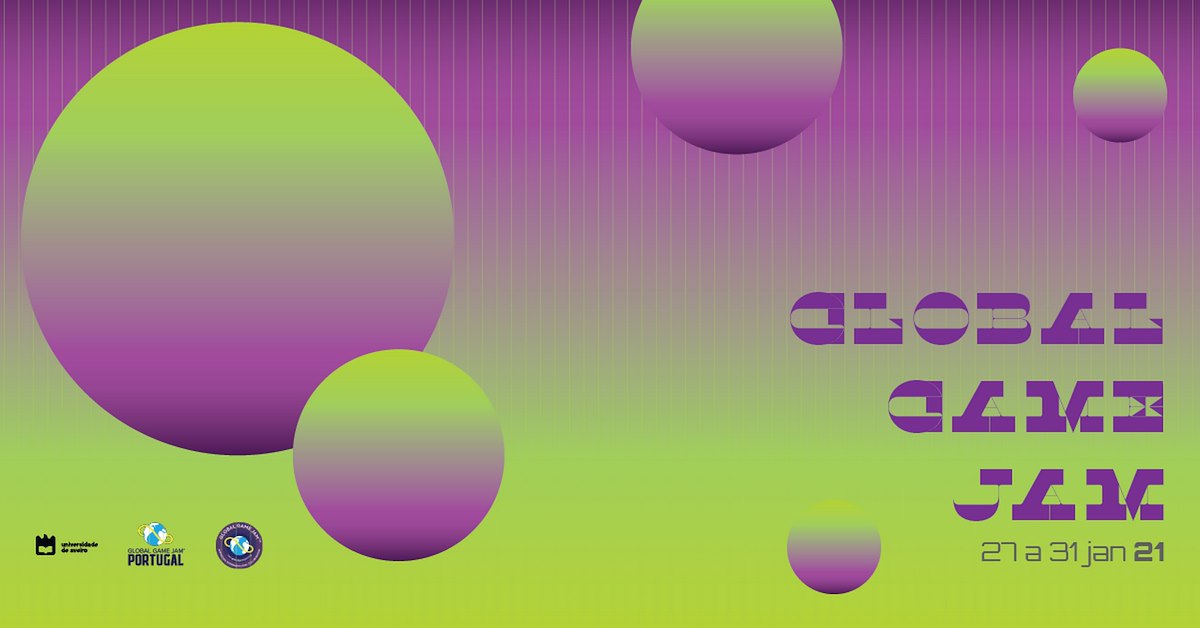
The University of Aveiro is promoting the Global Game Jam® (GGJ), from 29 to 31 January 2021, the largest game creation event in the world, which takes place simultaneously in dozens of countries.

DigiMedia members are involved in the organization of the event – Ana Veloso, José Nunes, Liliana Costa, Mário Vairinhos, Mónica Aresta, Nelson Zagalo, Pedro Beça, Silvino Martins, Sofia Ribeiro, Tânia Ribeiro – along with other researchers from the Department of Communication and Art, the Department of Electronics, Telecommunications and Informatics and the School of Technology and Management of Águeda.

Imagem de divulgação, com figuras esféricas, da Global Game Jam

In the past edition of Global Game Jam® (GGJ) more than 60 UA members participated, among students, teachers and researchers.

The University of Aveiro participates for the fourth time (https://globalgamejam.org/2021/jam-sites/universidade-de-aveiro-ggj2021), now in an online format. The organization expects the participation of more than a hundred young creative and innovative university students, who during the 48 hours of the event will develop team games.

For more information please contact ggj.uaveiro@gmail.com.

Skip to content