News

Explore the latest research insights.

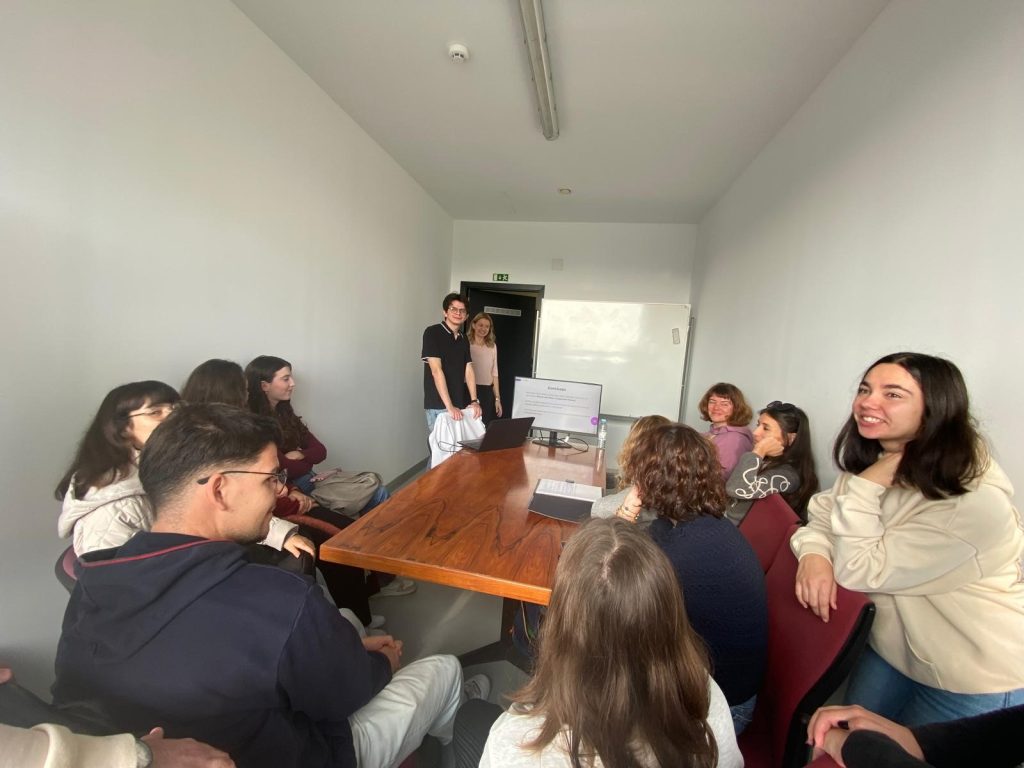
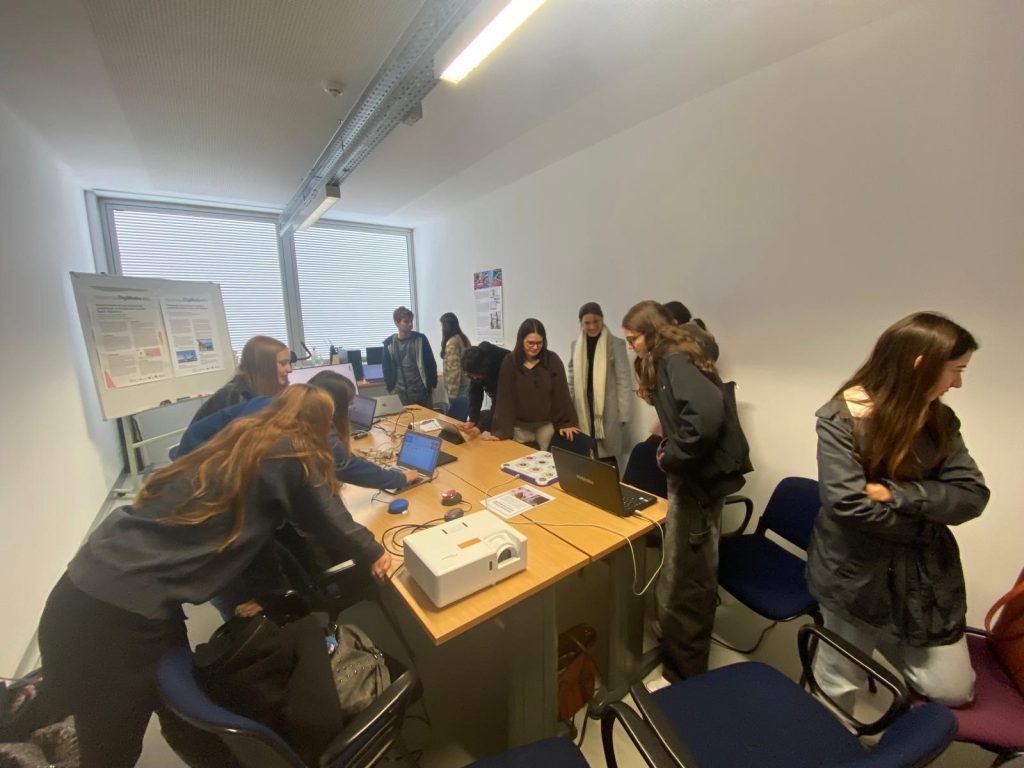
The UAInclusive laboratory team hosted approximately 25 students for a session dedicated to Assistive Technologies in Education, on November 19. This initiative was an invitation from the professor responsible for Curricular unit of “Neurodevelopment, Learning and Inclusion”, of the following Masters at the University of Aveiro: Master in Teacher Education – Pre-school education and 1st cycle of basic schooling; Master in Primary School Education and Mathematics and Natural Sciences in 2nd Cycle; Master in Primary School Education and Portuguese and History and Geography of Portugal in 2nd Cycle

In the first session, organized by the PhD student Francisca Lourenço, and the DigiMedia researchers Rita Oliveira and Oksana Tymoshchuk, students had the opportunity to learn about and experience various assistive resources and technologies available in the UAInclusive laboratory that support the teaching-learning process, as well as discuss pedagogical practices aimed at promoting accessibility and participation for all students.

On the other session, the PhD student, Lucius Vinicius-Filho, presented an inclusive prototype designed to support music education for children with Cerebral Palsy. The prototype, developed as part of his academic research, aims to support active participation in musical activities, promoting autonomy, creative expression, and greater accessibility in the learning process.

Participants also discovered several Virtual Reality projects developed at the XR Laboratory. These demonstrations were led by Professor Mário Varinhos, who highlighted how immersive technologies can be used for both teaching and research, and emphasized their transformative potential in educational contexts.

This initiative reinforces Digimedia and UAInclusive’s commitment to training future education professionals, contributing to the dissemination of knowledge and the construction of more inclusive and equitable educational environments.
The coordinator of the Cres(Ser) project at the Águeda Health Center, Dr. Teresa Neves, and the DigiMedia researcher Oksana Tymoshchuk, participated in the XXXV National Meeting of the Portuguese Association of Child and Adolescent Psychiatry (APPIA), which took place at the Aveiro Congress Center on November 13th.

The presentation, entitled “Cres(SER) Project — Investing in Mental Health in Early Childhood,” was part of a panel dedicated to the theme “Promoting Skills in a Network”. The aim was to reflect on the project’s evolution and collaboration with the University of Aveiro, presenting several results of this partnership: the proposed visual identity, a prototype application, and a digital platform for the project.

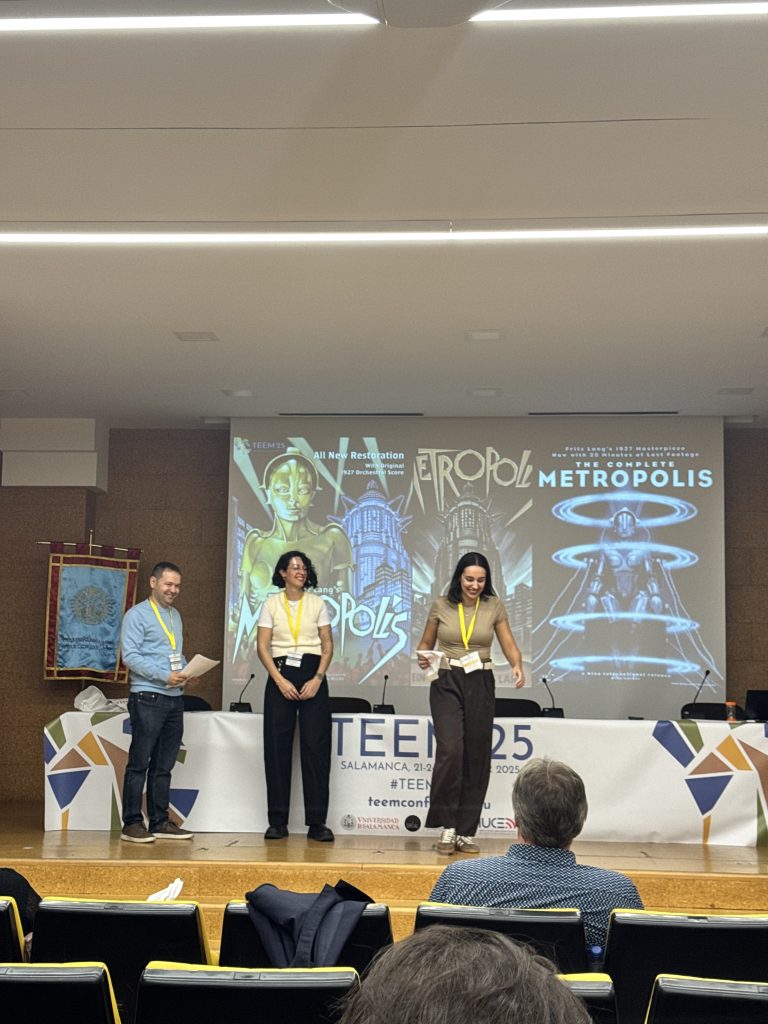
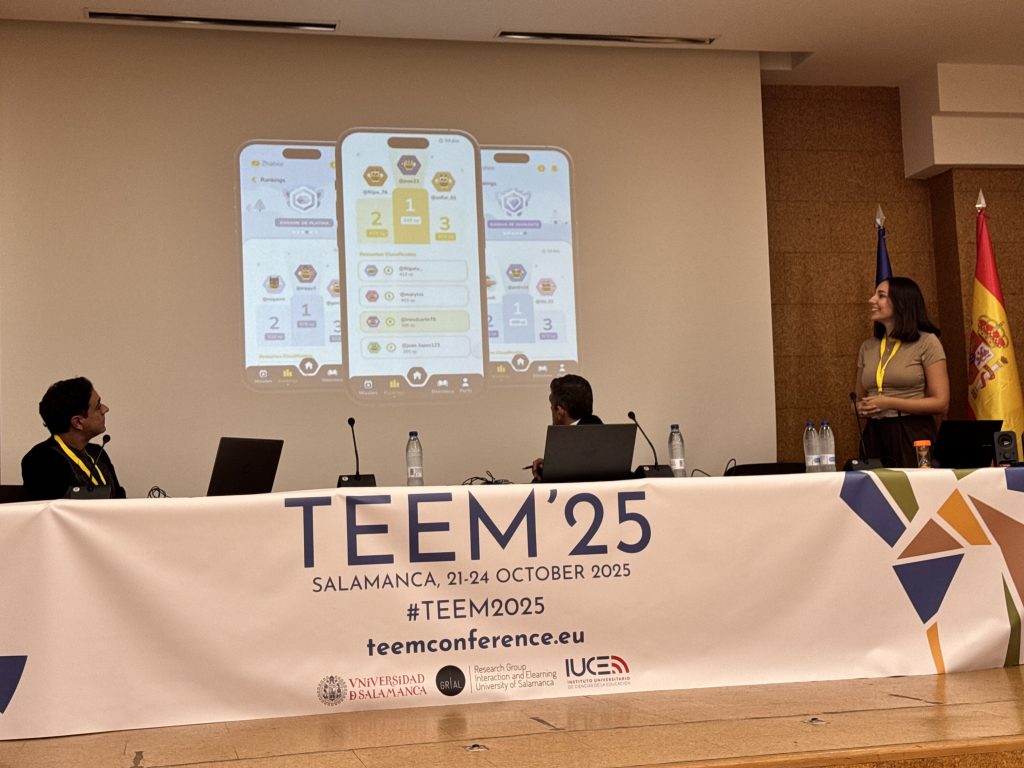
The paper “Zhabee: Empowering Teen Health Literacy through an Interactive App for Cancer Prevention”, presented at the 13th edition of the TEEM 2025 International Conference – Technological Ecosystems for Enhancing Multiculturality, received two awards: Best Paper and Best Presentation in Track 3 – Global Transformation in Healthcare: Integrating Cutting-Edge Technologies for a Multicultural Future.

The paper includes as co-authors two integrated researchers from DigiMedia, Ana Patrícia Oliveira and Telmo Silva, who supervised the final project in Multimedia and Communication Technologies that gave rise to this research.

The paper was presented at the conference by Sara Pombo, one of the co-authors. Henrique Policarpo and Marta Silva were also co-authors and members of the team that developed the project.

The Zhabee project aims to promote health literacy among teenagers through an interactive app for cancer prevention, combining user-centred design, gamification, and validated educational content.

This international distinction reinforces the excellence and visibility of DigiMedia in the field of interactive technologies applied to health and education.

Maria Vasconcelos, PhD student in New Media and member of DigiMedia Research Center, and her main supervisor, Catarina Lelis, attended the EUKO Annual Conference 2025, whose theme was “Storytelling in Business Communication”, and was held October 23-25, in London.

Maria presented the paper “From Stories to Sustainability: Exploring Tourism Narratives in Portugal’s Inland Regions,” which was part of her PhD research. The research analyzed two case studies, ADRIMAG (Associação de Desenvolvimento Rural Integrado das Serras do Montemuro, Arada e Gralheira) and Story Studio Accommodation Network, exploring how their communication strategies incorporate storytelling practices that reflect sustainability and regional identity. The presentation demonstrated how these narratives can enhance the visibility of local cultural and natural heritage while promoting responsible tourism practices that positively impact community development. The conference brought together researchers, professionals, and academics from diverse fields, providing opportunities for discussion, feedback, and the exchange of ideas on storytelling.

On October 7, during Aveiro Tech Week 2025, the Zhabee project was presented as part of the Exhibition of Technological Innovations of the University of Aveiro. The project was developed by students Henrique Policarpo, Marta Silva, and Sara Pombo as their final project for the Bachelor’s Degree in Multimedia and Communication Technologies (DeCA-UA) during the 2024/2025 academic year. The work was supervised by DigiMedia researchers Ana Patrícia Oliveira and Telmo Silva.

Zhabee is an interactive digital application designed to promote health literacy and cancer prevention among teenagers aged 13 to 16. Combining communication design, gamification, and web technology, the project aims to encourage healthy habits in an engaging, playful, and scientifically grounded way, aligning with the United Nations Sustainable Development Goals (SDGs), particularly SDG 3 (Good Health and Well-Being) and SDG 4 (Quality Education).


During the event, participants had the opportunity to try a functional version of the mobile application and to take part in interactive activities focused on healthy lifestyle habits, showcasing the potential of design and technology in promoting healthy behaviors and raising awareness about cancer prevention.

The Zhabee project demonstration reinforced the role of the University of Aveiro as a hub of innovation, research, and community engagement, highlighting how science and creativity are shaping the future through technological solutions with positive social impact.

Digimedia’s Science and Technology Manager, Mariana Coronha, participated, along with the other science managers from DeCA’s Research Units, in the 1st National Conference of the Portuguese Association for Science Management, held at the University of Aveiro on October 8th.

The event was organized by the recently created Portuguese Association for Science Management, which aims to raise awareness to the importance of these professionals for research and science in Portugal.

This one-day event was an opportunity for sharing different experiences and roles of science managers in Portugal, recognizing the work carried out by them at the Research Units and reflecting on the future of this field in our country.

On the 26th of September, several members from DigiMedia were present at BlueNIGHTs 2025, joining the celebration of the European Researcher’s Night at the small fisherman village of Torreira (Murtosa). Daniela Figueiredo (post-doc researcher at DigiMedia), along with Leonardo Fernandes (Master student in Digital Game Development), João Costa and Márcia Lima (PhD students from Multimedia in Education) had the opportunity to share with the local community several activities focusing on young people (from gamification approaches to VR, but also animation, multimedia & music). More than 300 students from local schools came to the event. It was a day full of Science, Research and Emotions, with the opportunity to meet researchers from several other research units from the University of Aveiro. Next year, they hope to be back for BlueNIGHTs Torreira 2026! More details here.

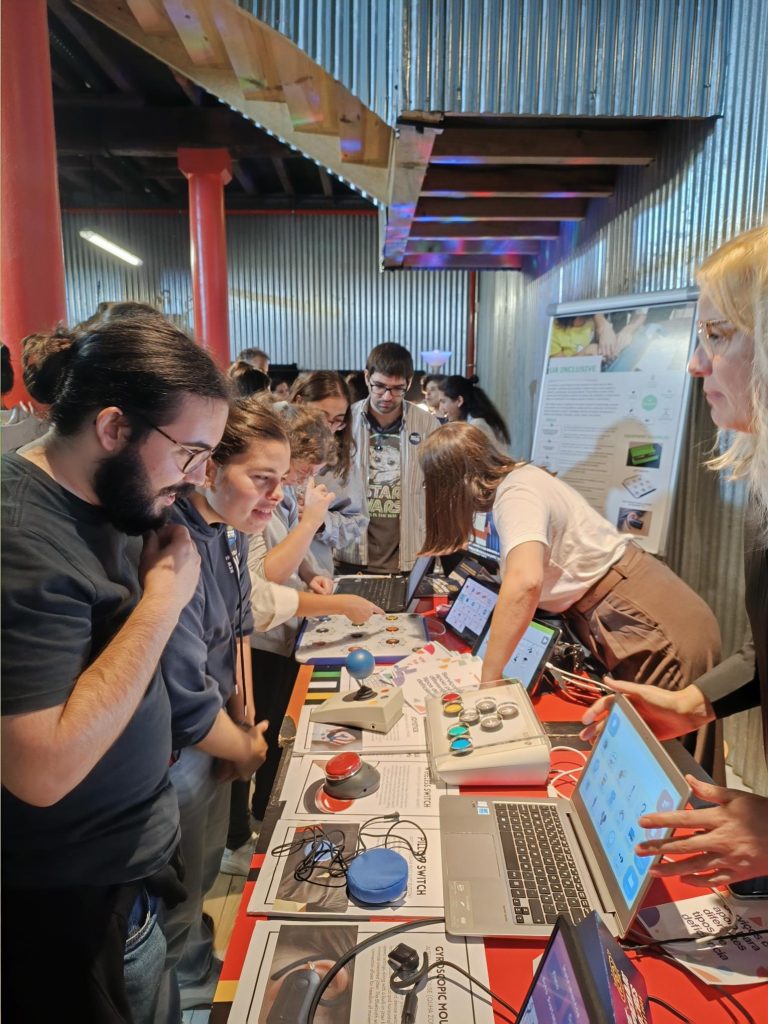
During the European Researchers’ Night, the Lab Inclusive Space from Digimedia presented two demonstrations, making research more visible and accessible to the public. One of the projects showcased was Communication Processes for Inclusive Academic Spaces (Francisca Lourenço, Rita Oliveira, Oksana Tymoshchuk, Ana Isabel Veloso), which explores methodologies and practices to make university environments more accessible and welcoming. Alongside it, the team also presented the Educational Game with Eye-Tracking for Children with Cerebral Palsy (Lucius Vinicius Filho, Oksana Tymoshchuk, Rita Oliveira, Nelson Zagalo), which combines eye-tracking technology with pedagogical design to foster adaptive and inclusive learning experiences. At the Fábrica de Ciência Viva in Aveiro, the demos were presented and supported by the researchers Francisca Lourenço, Lucius Filho, Oksana Tymoshchuk, Rita Oliveira, and Ana Patrícia Oliveira.

The participation of these projects in the Researchers’ Night was an excellent example of knowledge transfer to society. By showing how research can respond to concrete needs, the initiative promotes the dissemination of science and strengthens the role of research as a driver of social impact, generating inspiration, engagement, and awareness of the value of science in everyday life.

Between September 15 and 17, the PhD student Silvino Martins took part in the II Encontro Psiquiatria e Saúde Mental Região Centro, held in Leiria, with a poster titled: “Integração de Elementos Narrativos e Lúdicos na Exposição Terapêutica a Fobias em Realidade Virtual: Protocolo de Estudo de Caso para Fobia Específica de Voo”.

The work features the case study protocol developed as part of the student’s doctoral research, which explores the use of a virtual reality tool to support phobia treatment in clinical psychology settings.

The poster received the Best Poster Award at the end of the event.

Several members of DigiMedia took part in the XR Salento – International Conference on eXtended Reality, held in Otranto, Italy, from June 17 to 20.

The team disseminated its research developed in the field of virtual reality, across different domains of application such as education and therapy, contributing to a program that included around 90 oral communications (full paper presentations) and 90 posters.

The following works, now published in a Springer volume, were presented by members of the research unit at the conference:

  • Gomes, D., Vairinhos, M., & Pombo, P. (2026). Science Dissemination in STEAM Projects – A Virtual Reality Educational Game on Electrical Circuits. Em L. T. De Paolis, P. Arpaia, & M. Sacco (Eds.), Extended Reality (Vol. 15742, pp. 429–439). Springer Nature Switzerland. https://doi.org/10.1007/978-3-031-97778-7_32
  • Martins, S., Vairinhos, M., Soares, S., Félix, A., Araújo, C., & Diniz, F. (2026). Evaluating Usability and Immersion in a Virtual Reality Game for Fear of Flying: A Pilot Study with a Non-phobic Sample. Em L. T. De Paolis, P. Arpaia, & M. Sacco (Eds.), Extended Reality (Vol. 15737, pp. 213–225). Springer Nature Switzerland. https://doi.org/10.1007/978-3-031-97763-3_16
  • Reisinho, P., Raposo, R., Ribeiro, O., Zagalo, N., & Silva, J. (2026). Effects of a Pilot Virtual Reminiscence Intervention to Promote Storytelling in Older Adults with Dementia. Em L. T. De Paolis, P. Arpaia, & M. Sacco (Eds.), Extended Reality (Vol. 15739, pp. 198–209). Springer Nature Switzerland. https://doi.org/10.1007/978-3-031-97766-4_14
Skip to content