The Iberoamerican research network PROCOMHUM – Perspetivas em Comunicação Multimédia e Humanismo has officially launched its new website https://procomhum.auip.org/, marking an important milestone in strengthening collaboration and visibility among researchers working in the fields of multimedia communication, digital media, and humanism.
DigiMedia is part of this international network through the participation of its researchers Rita Oliveira, who serves as member of the Scientific Council and also Portugal’s pivot representative, and Patrícia Oliveira, Portugal’s pivot representative. Their involvement reflects DigiMedia’s ongoing commitment to international research collaboration and interdisciplinary knowledge exchange.
The new platform will support the dissemination of research activities, publications, events, and collaborative opportunities, fostering stronger connections between institutions and researchers from different countries while promoting future international projects and initiatives.
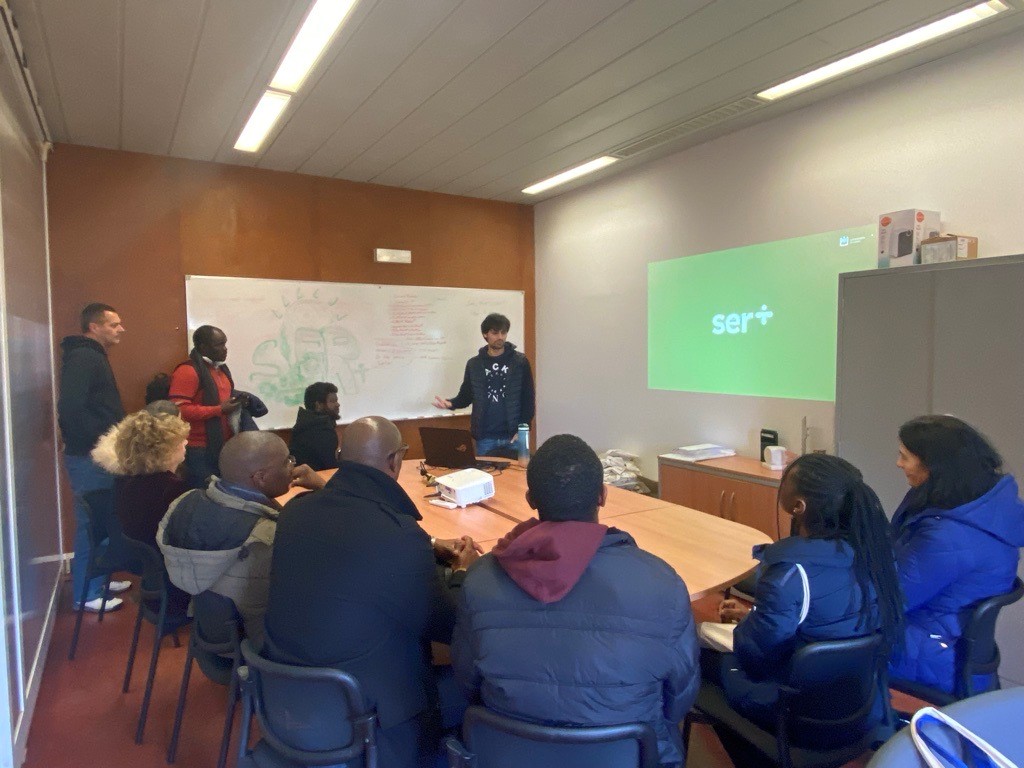
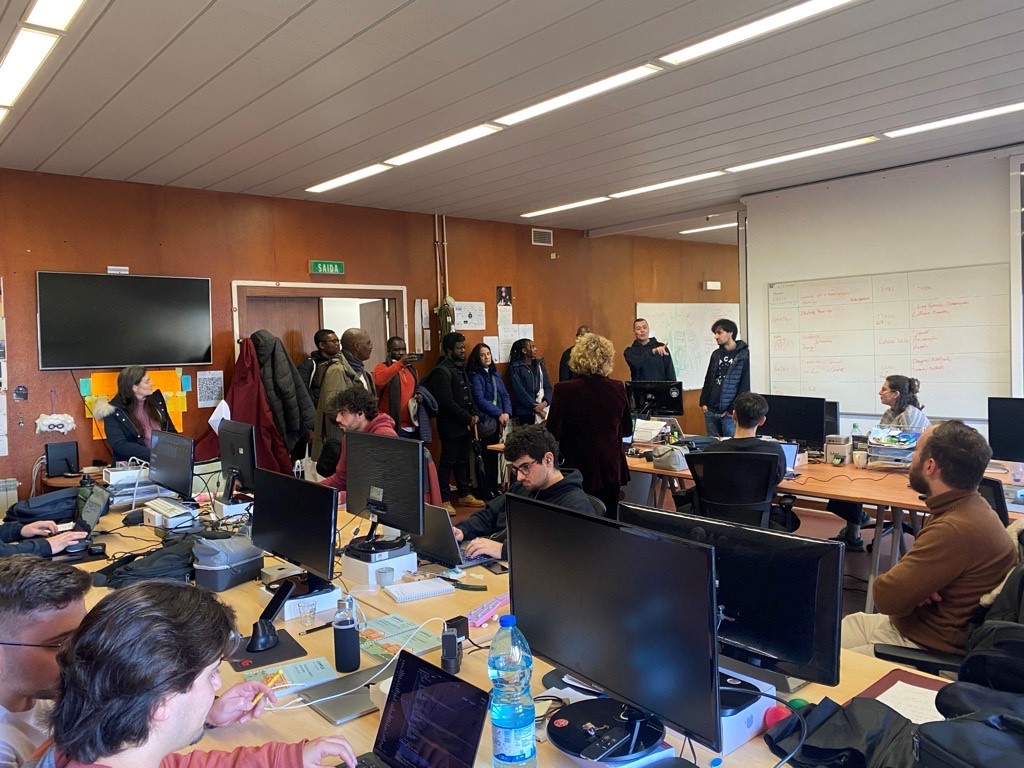
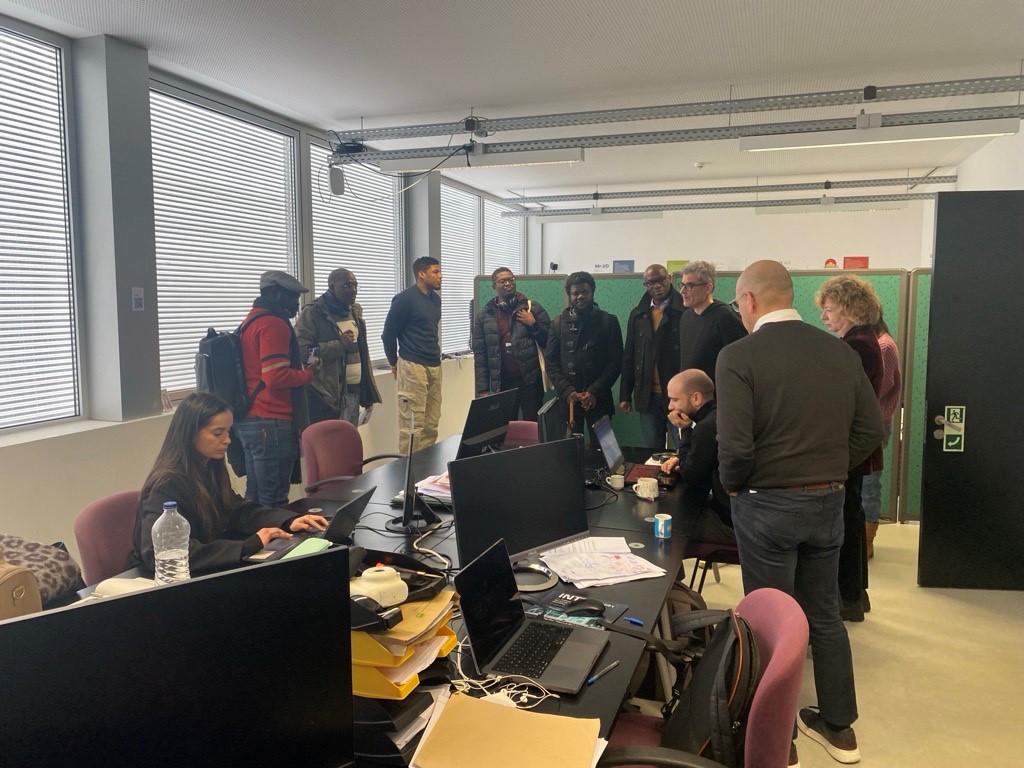
The DigiMedia laboratories at the University of Aveiro welcomed a delegation from the University of Huíla (ISCED – Lubango), represented by Professors Helder Bahu and Filipe Matias, President and Vice-President of ISCED – Huíla, accompanied by other faculty members from the institution, on February 5.
The visit took place within the framework of the UNI.AO Programme, through which the University of Aveiro is collaborating in the design of the first PhD programme in Education in southern Angola, to be launched at the University of Huíla (ISCED-Lubango). The meeting strengthened academic and scientific cooperation between the institutions, fostering the exchange of experience and research and innovation practices applied to Education and technology.
As part of the programme, the visitors had the opportunity to tour and attend presentations at our DigiMedia laboratories (the Lab Campus, the Social IVX Lab, the https://digimedia.pt/lab/lab-xr/, and the UAInclusive Lab), where ongoing research lines, projects, and technological approaches were showcased—many with potential for transfer and adaptation to the Angolan context.
The UNI.AO Programme, funded by the European Union and implemented by the technical cooperation agency Expertise France, aims to support Angola’s higher education system in knowledge production and the promotion of innovation through the creation of new postgraduate programmes, research funding, and capacity-building initiatives in key areas.
The visit to the DigiMedia laboratories marks another step in deepening cooperation between the University of Aveiro and the University of Huíla, aligned with a shared ambition to strengthen advanced training and research in the field of Education.
Sudarshan Kadam, a PhD student in New Media, at the University of Aveiro, was selected to participate in the Let’s CHAOS course, implemented within the NAWA SPINAKER programme.
The Let’s CHAOS course offers an advanced learning pathway focused on Inclusive Systems Design, combining critical reflection, research methodologies, and interdisciplinary perspectives. As part of the programme, participants will attend an online component, followed by a fully funded on-site mobility period, in March, at Łódź University of Technology (Poland), an ECIU University.
Sudarshan’s PhD project’s “Interactive Shoppable Video strategies for specific markets- Portugal & Spain” is supervised by Professor Jorge Ferraz Abreu and Professor Telmo Silva.
This participation reinforces DigiMedia’s commitment to international collaboration, advanced doctoral training, and inclusive, forward-looking research practices.
The DigiMedia researcher Oksana Tymoshchuk outlined the mission of the UNI.AO Programme, in which the University of Aveiro is collaborating in the design of the first doctoral programme in Education in southern Angola, at the University of Huíla.
The DigiMedia researcher participated as a supervisor for three PhD students in the area of Educational Technologies, and promoted a seminar on the use of qualitative data analysis technologies, such as WEBQDA and some Artificial Intelligence tools.
The UNI.AO Programme, funded by the European Union with €13 million, supports the Angolan higher education system in the production of knowledge and the promotion of innovation. Implemented by the French technical cooperation agency Expertise France, the programme aims to contribute to the training of qualified professionals capable of addressing the country’s current and future challenges through the creation of new postgraduate programmes, research funding, and capacity-building initiatives in key areas.
In this text, the author critically examines a manifesto advocating for the ban of generative artificial intelligence in Portuguese universities and argues for a more nuanced and informed approach.
The article highlights the importance of AI literacy, ethical reflection, and the adaptation of pedagogical practices to contemporary technological realities in higher education.
Our research at DigiMedia has been featured in the OECD Digital Education Outlook 2026, highlighting the social relevance and influence of our work in shaping global education policy.
Published by the Organization for Economic Co-operation and Development (OECD) in January 2026, the Digital Education Outlook 2026 report examines how generative artificial intelligence (GenAI) is transforming education, identifying evidence-based practices that enhance learning, teaching, and research. The report offers guidance for policymakers and education stakeholders on integrating AI tools responsibly and effectively within education systems worldwide.
DigiMedia’s work is therefore recognized within this international context for its contribution to digital education research that informs policy design and public decision-making. This acknowledgment reinforces DigiMedia’s role as a contributor to the societal impact of research and its relevance to ongoing global discussions on digital transformation in education.
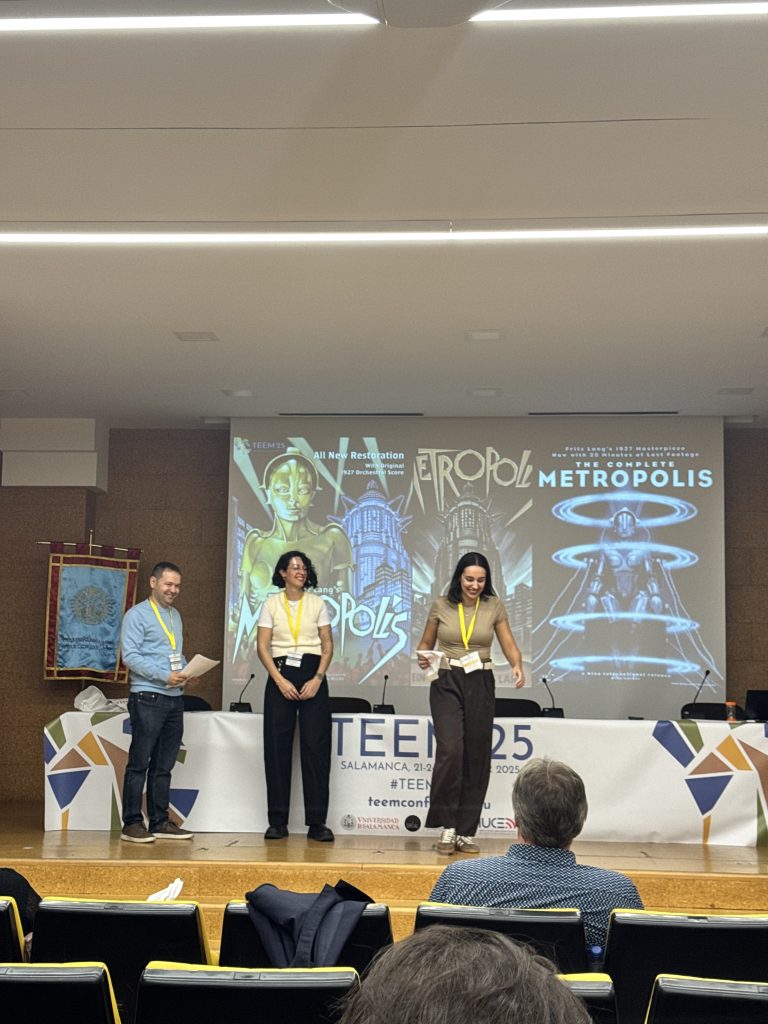
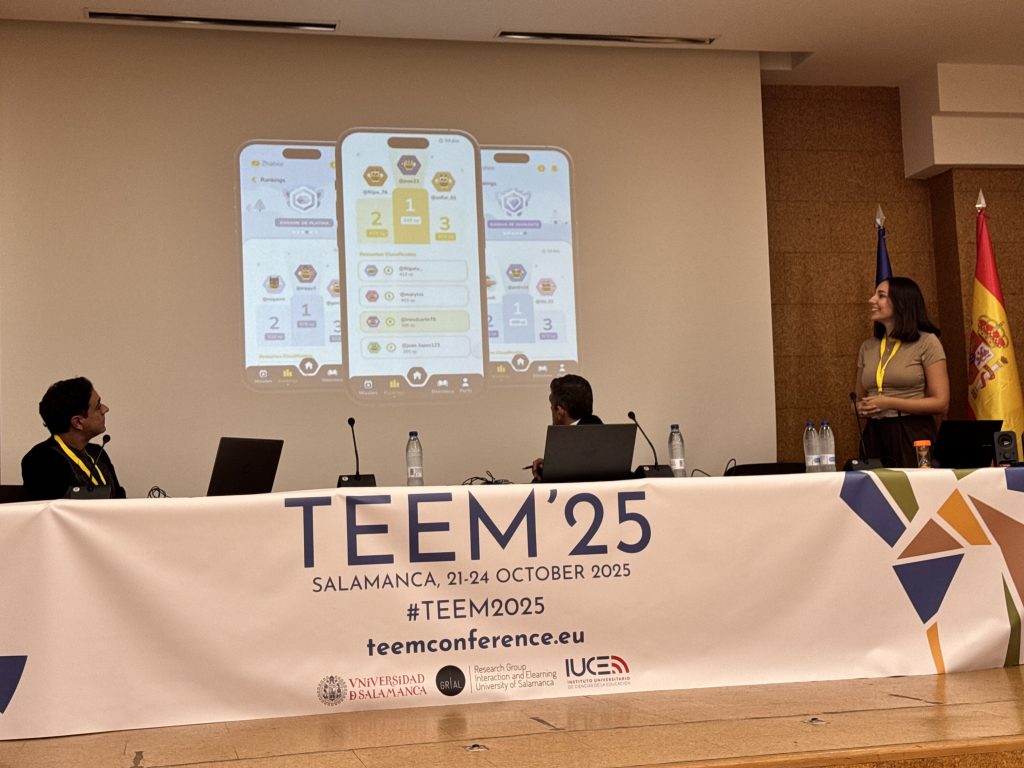
The paper “Zhabee: Empowering Teen Health Literacy through an Interactive App for Cancer Prevention”, presented at the 13th edition of the TEEM 2025 International Conference – Technological Ecosystems for Enhancing Multiculturality, received two awards: Best Paper and Best Presentation in Track 3 – Global Transformation in Healthcare: Integrating Cutting-Edge Technologies for a Multicultural Future.
The paper includes as co-authors two integrated researchers from DigiMedia, Ana Patrícia Oliveira and Telmo Silva, who supervised the final project in Multimedia and Communication Technologies that gave rise to this research.
The paper was presented at the conference by Sara Pombo, one of the co-authors. Henrique Policarpo and Marta Silva were also co-authors and members of the team that developed the project.
The Zhabee project aims to promote health literacy among teenagers through an interactive app for cancer prevention, combining user-centred design, gamification, and validated educational content.
This international distinction reinforces the excellence and visibility of DigiMedia in the field of interactive technologies applied to health and education.
Maria Vasconcelos, PhD student in New Media and member of DigiMedia Research Center, and her main supervisor, Catarina Lelis, attended the EUKO Annual Conference 2025, whose theme was “Storytelling in Business Communication”, and was held October 23-25, in London.
Maria presented the paper “From Stories to Sustainability: Exploring Tourism Narratives in Portugal’s Inland Regions,” which was part of her PhD research. The research analyzed two case studies, ADRIMAG (Associação de Desenvolvimento Rural Integrado das Serras do Montemuro, Arada e Gralheira) and Story Studio Accommodation Network, exploring how their communication strategies incorporate storytelling practices that reflect sustainability and regional identity. The presentation demonstrated how these narratives can enhance the visibility of local cultural and natural heritage while promoting responsible tourism practices that positively impact community development. The conference brought together researchers, professionals, and academics from diverse fields, providing opportunities for discussion, feedback, and the exchange of ideas on storytelling.
Malmö University in Sweden hosted the 7th edition of the AI and Games Summer School. Among the participants was Cláudia Vale Oliveira, a student in the New Media PhD Program and a researcher at DigiMedia, who participated in this edition marked by innovation, creativity, and critical reflection on the role of artificial intelligence (AI) in gaming.
During five days, engineers, programmers, researchers, and game designers from both academia and industry shared knowledge and discussed the latest trends and influences in the use of AI in game development. The researcher from the University of Aveiro (UA), in addition to perspectives on player experience and interaction with agents through natural language processing, particularly highlighted the role of generative AI in the creative process and the ethical issues and challenges that artificial intelligence raises in game development. Issues such as authorship, boundaries, and ethical responsibility reinforce the importance of training professionals who are aware and critical of the possibilities and risks of AI integrated into interactive design. She also emphasized that it was “an incredible and inspiring week,” an experience she found “both engaging and challenging.”
In the final days of the event, participants were challenged to participate in the Game Jam. In this context the researcher Cláudia Oliveira and her team developed the Baloonce prototype, a collaborative game that aims to create balance, combating the sedentary lifestyle and burnout associated with professions like gaming developers, designers, and researchers, exploring the importance of moving and coordinating the body in a world where the mind and digital world are pushed to their limits. The project stood out among the participating teams, being selected as the best project of the Game Jam, a recognition that highlights the talent and capabilities of those involved. The project will soon be shared on Github.
This event was guided by leading figures in the field, such as Georgios N. Yannakakis, Julian Togelius, co-authors of the book Artificial Intelligence and Games, and Antonios Liapis. It was made possible thanks to the support of King, the UA, and DigiMedia, which provided the doctoral student with the opportunity to participate in this international summer school.
For the UA community, this participation represents not only an opportunity to enrich the student’s curriculum, but also a contribution to the development of new lines of research in the fields of new media, immersive games, experience design, and the ethics of artificial intelligence.
The Conference ACM IMX 2025, co-organized by the University of Aveiro and the Universidade Federal Fluminense (Brazil), took place between 3rd and 6th June 2025, in Niterói, Rio de Janeiro, Brazil.
Jorge Ferraz Abreu, a Digimedia researcher, was one of the General Chairs of this conference, along with other members of the DigiMedia team: Pedro Almeida (demo chair), Telmo Silva and Carlos Santos (Web Chairs), Juliana Camargo (Publicity Chair) and Ana Velhinho (Acessibility Chair).
The conference had 22 full papers, 17 WiP, 17 Demos, 1 industry talk, and the participation of 6 doctoral students and 3 keynote speakers.